While most airport experiences converge on the same design brief – strip lighting, pleather seating, and a sandwich engineered to outlive us all – many train stations take a different route. Some still harbour eternally shelf-stable ham and cheese baps, but numerous are architectural time capsules, their grandeur far more durable than the catering.
Born in the 19th century, rail travel was an unprecedented force that recalibrated humanity’s understanding of distance. Cities built palaces to the locomotive in an era when it was glamorous, novel, and a miracle of human invention. In 1825, the world’s first steam‑powered passenger railway ran between Stockton and Darlington, setting off a building boom that gave us domes, frescoes, turrets and ironwork writ large.
These stations have witnessed more history than many museums: wars, revolutions, the rise and fall of empires. They became symbols of power, which is why some of the grandest survive in former colonial cities from India to Mozambique. They were also the departure points for Victorian fantasies like the Orient Express, which whisked passengers from Paris to Istanbul in velvet‑lined splendour.
So next time you set off by rail, look up. Pay attention to the celestial ceilings, the Beaux‑Arts flourishes, the Gothic excess. Just don’t miss your train.
The world's most beautiful train stations
Antwerpen‑Centraal Station
Antwerp
Antwerpen‑Centraal Station
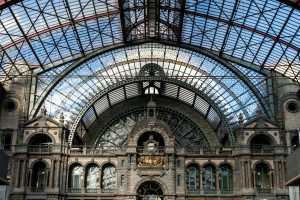
Dubbed the “Railway Cathedral”, Antwerpen‑Centraal is a hymn to turn‑of‑the‑century self‑belief. Opened in 1905, its neo‑Baroque interior piles marble upon marble beneath a monumental stone dome rising more than 75 metres – higher than many church towers across Europe. Critics once complained it was too extravagant, citing the use of more than 20 types of marble as excessive (Victorians are no fun). Not all spectacle at Antwerpen‑Centraal is stationary here either – in 2009, the station famously hosted a 200‑strong flash mob rendition of The Sound of Music’s ‘Do‑Re‑Mi’. Union Station Los Angeles Union Station, completed in 1939 by father‑and‑son architects John and Donald Parkinson, is LA’s great civic waiting room. A blend of Spanish Colonial Revival, Mission Revival and Art Deco styles, it nods to California’s layered heritage without slipping into pastiche. Outside, a white bell tower recalls the state’s missions; inside, the vast waiting hall offers painted wooden ceilings, travertine marble walls and the sort of chairs you wouldn’t mind being delayed in. HafenCity Universität
U‑Bahn Station
Hamburg
U‑Bahn Station, Hamburg
U‑Bahn Station, Hamburg
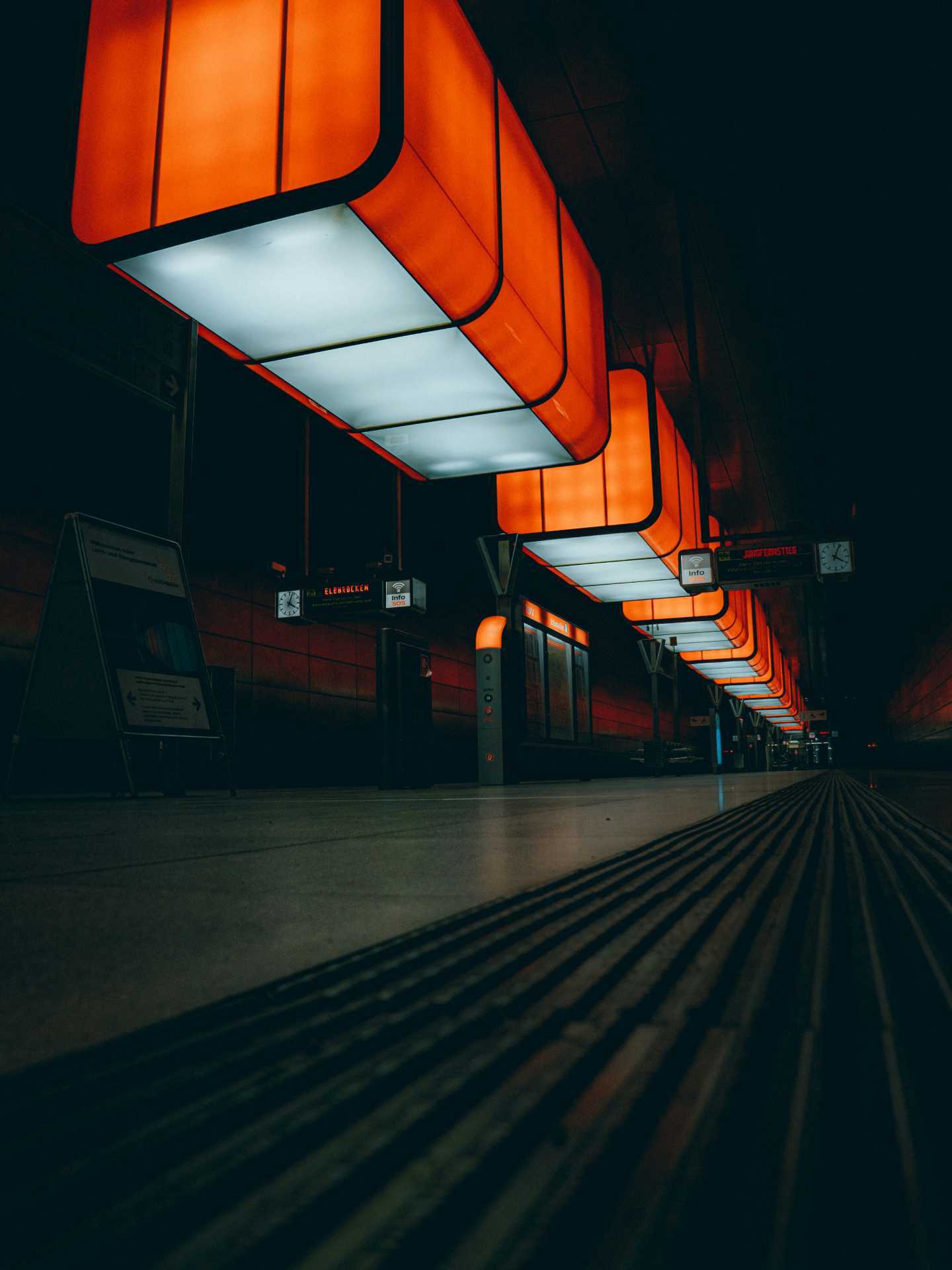
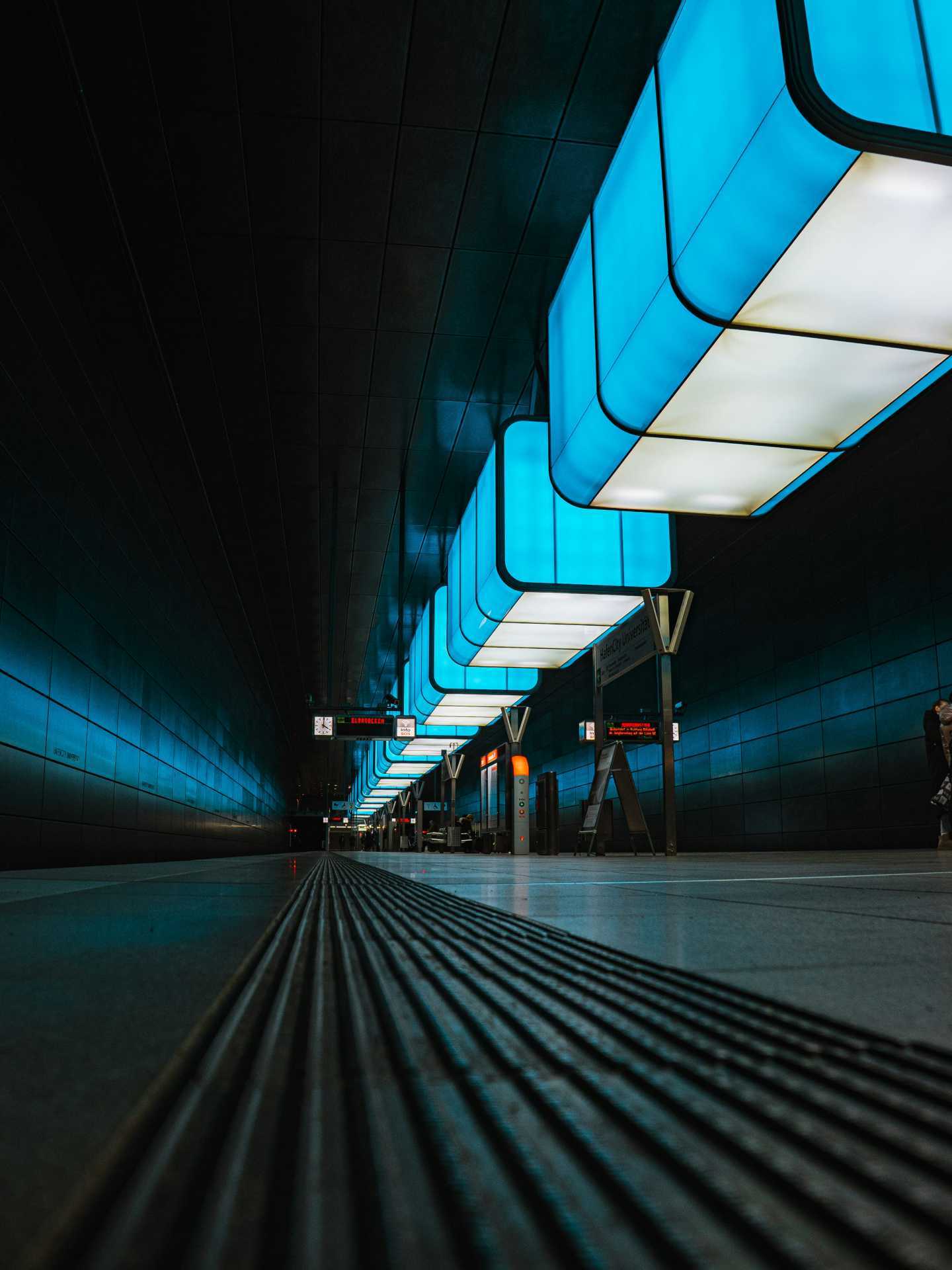
Not all beautiful stations need to wear a historical costume. Hamburg’s HafenCity Universität U‑Bahn stop is a contemporary standout, part of the city’s vast redevelopment of its former port. Underground, the metro station trades marble for steel panelling and immersive lighting installations. The design takes cues from shipping containers and harbour infrastructure, with colour‑shifting lights that evoke tides, cargo and the rhythm of industry. It’s proof that modern transit design can be memorable without the turrets, stained glass and ironwork.
Grand Central Terminal
New York
Grand Central Terminal
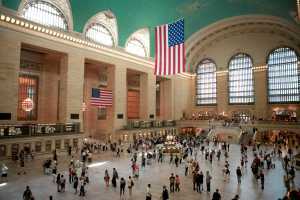
If stations had agents, Grand Central’s would be slammed. Opened in 1913, this Beaux‑Arts behemoth has appeared in more films than most budding actors and remains a triumph of urban aspiration. Its vast main concourse, framed by monumental arched windows, is crowned by a celestial ceiling depicting a starry sky. The mural famously shows the constellations reversed, as if viewed from outside the heavens – a detail attributed either to medieval manuscripts or human error, now cherished as lore. Aside from architecture, the station’s lost-and-found department is legendary: false teeth, prosthetic limbs, wedding dresses, urns of ashes, caged animals and even a $100,000 violin have all passed through its hands.
King’s Cross St. Pancras
London
King’s Cross St. Pancras
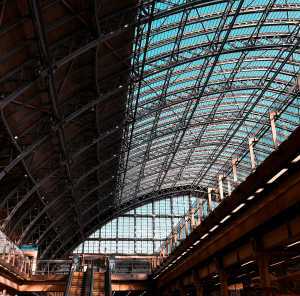
St Pancras already feels thrilling because, unlike most London terminals that spirit you off to Watford or Plymouth, this one promises Paris. A masterpiece of Victorian Gothic, St Pancras pairs William Henry Barlow’s vast iron‑and‑glass train shed – once the world’s largest enclosed space – with the red-bricked former Midland Grand Hotel, complete with turrets and a mean Martini bar. Rescued from near‑demolition in the 1960s thanks largely to poet‑campaigner John Betjeman (now immortalised in statue form), the station underwent an £800m revival that scrubbed centuries of grime from its façade and restored thousands of panes of glass. Look up and you’ll spot Tracey Emin’s neon installation I Want My Time With You looping across the concourse.
São Bento Railway Station
Porto
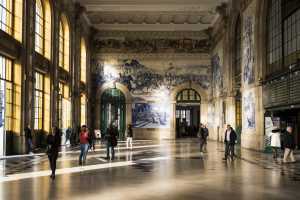
São Bento Railway Station
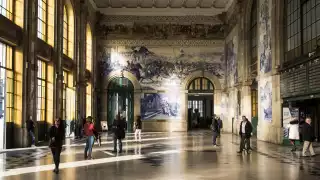
Porto’s defining visual signature is azulejos – hand‑painted tiles that cover buildings’ walls – and São Bento Station is their most persuasive advocate. Modest in scale but lavish in effect, the station’s main hall is lined with more than 20,000 tiles completed in 1916 by artist Jorge Colaço. The murals depict key moments from Portuguese history: royal processions, battles, scenes of rural life, all rendered in tin‑glazed ceramic. The building stands on the site of a former Benedictine convent, which feels appropriate given the near‑religious devotion the station applied to its decoration.
CFM Railway Station
Maputo
View on Instagram
Maputo’s CFM Railway Station is a pastel‑coloured statement of early‑20th‑century ambition. With its mint‑green façade, wrought‑iron latticework and imposing central dome, it is often (incorrectly) attributed to Gustave Eiffel (the name gives the clue as to what he designed). In reality, it was designed by Portuguese architects Alfredo Augusto Lisboa de Lima, Mário Veiga and Ferreira da Costa, completed in 1916, with Eiffel’s firm likely consulted rather than responsible. A high point of Portuguese colonial architecture, the station overlooks Praça dos Trabalhadores and even served as a set to the film Blood Diamond. The rail legacy in Mozambique is complicated – tied to colonial oppression – but architecturally, the building remains one of Africa’s most striking stations.
Kanazawa Station
Kanazawa
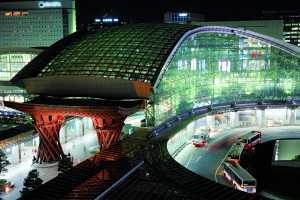
Kanazawa Station
Updated in 2005, Kanazawa Station is daringly modern – and once deeply controversial. The defining feature is the Tsuzumi Gate, a monumental wooden structure shaped like a traditional hand drum, standing before the vast glass Motenashi Dome, designed to shelter visitors from rain and snow. The contrast between ultra‑modern materials and traditional form unsettled some in a city famed for its preserved Edo‑era streets (Kanazawa was spared WWII bombing). Today, the station is a beloved symbol of the city’s ability to bridge old and new.
Town Hall Station
Melbourne
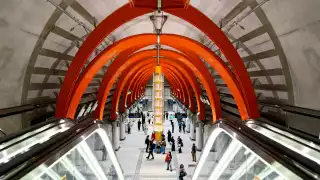
Town Hall Station
Not yet in regular service but already a talking point, Melbourne’s Town Hall Station is the city’s first new CBD rail stop in more than 40 years, carved deep beneath Swanston Street as part of the Metro Tunnel project. Rather than mimicking heritage above ground, the design opts for scale and restraint – vast vaulted platforms, broad concourses, and a sequence of monumental concrete arches that feel closer to an installation at the Tate than to transport infrastructure. Its platforms are among the widest underground metro platforms in the world, at a girthy 18 metres across.
Chhatrapati Shivaji Terminus
Mumbai
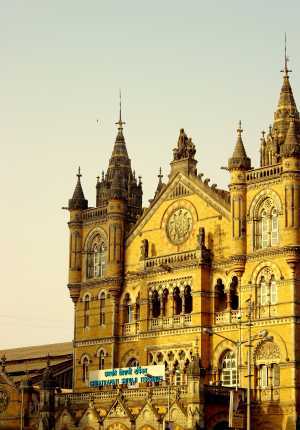
Chhatrapati Shivaji Terminus
Chhatrapati Shivaji Terminus operates on two frequencies at once: the relentless machinery of Mumbai’s commuter rail system and one of the most extravagant expressions of Victorian Gothic outside Europe. Completed in 1888 to mark Queen Victoria’s Golden Jubilee, F.W. Stevens’s design fuses Gothic Revival with Indian architectural traditions – turrets, spires and gargoyles colliding with domes, flora and carved animals. Built over a decade by British engineers and Indian craftsmen, the station is now a Unesco World Heritage Site, though this does little to slow the tens of thousands who surge through it daily.
Sirkeci Railway Station
Istanbul
Sirkeci Railway Station
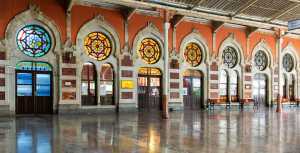
Sirkeci’s façade may not bully its way into every European grand-terminal canon, but what it lacks in scale it makes up for in narrative heft. Commissioned in the late Ottoman era and opened in 1890 as the eastern terminus of the Orient Express, it features indented horseshoe arches, stained glass, and Byzantine-tinged stone that showcase a carefully calibrated marriage of East-meets-West design by German-trained architect August Jasmund. Once the arrival point for aristocrats and spies alike, the station now sits mid-renaissance: a major restoration is underway to revive its roof, windows and grand halls as cultural venues.
Union Station
Denver
Union Station
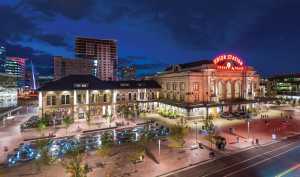
Denver’s Union Station has the curious distinction of being both a Beaux-Arts citadel and a surprisingly effective piece of urban furniture. The original 1881 depot – briefly crowned by the tallest clock tower in the American West – burned and rebuilt before the 1914 Beaux-Arts incarnation took over, its carved granite façades and monumental Great Hall once welcoming tens of thousands daily. After decades of waning rail use, a 21st-century revival has recast the building as part hotel, part social hub, part transit interchange: terrazzo floors and soaring ceilings now share space with restaurants, cocktail bars and the Crawford Hotel’s guestrooms, all part of a civic project to make “Denver’s living room” a destination in its own right.