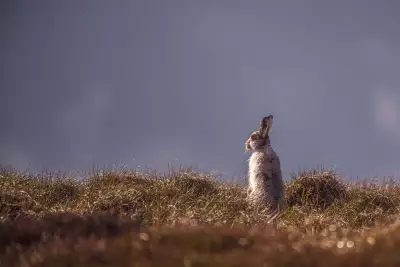
A blob of white in a sea of brown and green. A ghost amid the heather; a survivor at large on the moors. A mountain hare, still here. As recently as 2022, seeing one of these cold-adapted mammals in remote upland corners of the Peak District would have been less notable. Now, however, England’s lone stronghold of mountain hares – they are also found across their native Scotland, where numbers are far higher but hard to quantify – is at risk of disappearing altogether.
According to a study first published last year in the peer-reviewed Ecology and Evolution journal, this English population, introduced here during Victorian times for sport, is declining apace. Research by Dr Carlos Bedson, a quantitative spatial ecologist working with the wildlife watchdog Natural England, suggests a 60 per cent decline from 3,500 individuals in 2022 to just 1,000 in 2025. That, he says, “raises serious questions about their long-term viability”.
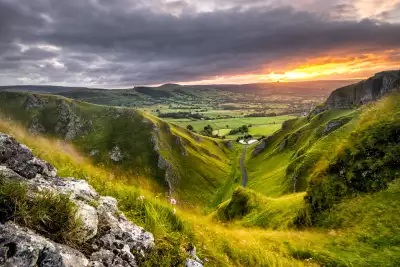
The view at Winnats Pass, Castleton in the Peak District captured at sunrise
Given these plunging numbers, visitors’ best chance of a sighting lies in enlisting an expert local guide. Accordingly, I arrange a private hare-spotting trip with Ant Pooles, the founder of Natural Derbyshire Tours. At present, these bespoke morning outings are exclusively offered – alongside spaces on hare-tracking group tours for up to six people – in March and April, in accordance with the animals’ most delightful trait.
“Mountain hares’ tawny coats turn white in preparation for winter, usually around October,” Ant explains as we drive through empty streets. He picked me up at daybreak from my train station-adjacent hotel in Glossop, an attractive, brownstone market town ten miles east of Manchester. “That allows them to blend in with the snow, thwarting predators like foxes.
No buildings are visible; instead, all I can see in every direction is a bumpy, barren landscape whose camouflage clothing palette also features inkier streaks
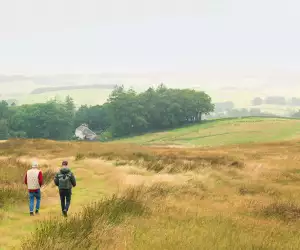
“By March, the snow has mostly melted, yet it takes weeks for the hares’ coats to lose their white – making it easier to see them.” Ant drives me into the Peak District National Park and up to a plateau called Snake Pass. We park beside one other lone vehicle; the swift elevation gain has left my ears popping. No buildings are visible; instead, all I can see in every direction is a bumpy, barren landscape whose camouflage clothing palette also features inkier streaks.
Formed from decomposed peat, such treacle-coloured veins are why this desolate area gets nicknamed the ‘Dark Peak’. Kinder Scout, one of the area’s best-known summits, looms to the south, and an isolated patch of conifers appears several miles east. But – boots on, binoculars donned and with Ant lugging a tripod and spotting scope – we start walking north, expecting to hike about three miles in total.
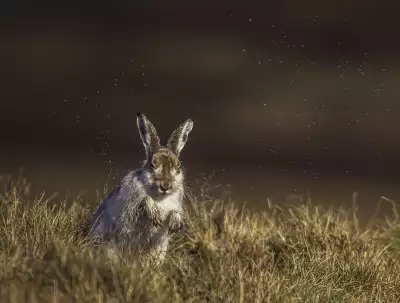
A mountain hare washes its coat
David Roberts
Initially, that’s by following the long-distance Pennine Way footpath’s puddly paving slabs as a petrichor tang scents the crisp air. When did Ant launch Natural Derbyshire Tours, I enquire? “In 2020, just in time for a global lockdown,” he chuckles. “I did my first mountain hare tour two years later.” They’re now his most popular offering.
Dates for the three or four group walks are first emailed to the company’s subscriber list; usually, by the time they tend to appear online, a fortnight later, three-quarters of spaces have been snapped up by hare enthusiasts. We leave the Pennine Way. In a high-density area for mountain hares, the paths become fainter and boggier, especially as we cross just above a slender cataract.
Suddenly, Ant quietens. “I think…” he half-says, raising his binoculars, “... yes!” Roughly 30 metres away is our first mountain hare. It’s barely discernible to my naked eye, but I spy the creature clearly once Pooles locates it in his scope. Still almost completely white, our first hare occupies a hollow high on the opposite hillside.
“Let’s try to get a little closer,” Ant suggests. As we edge forward, something whizzes overhead. A rarely seen short-eared owl, apparently, Pale-coloured wings spread out magnificently as it hunts.
This sort of wildlife encounter, exotic yet easily within reach of transport hubs, is precisely why Britain so excels at micro-adventures
In response, the mountain hare is now sitting up, stock-still and alert. I notice that it’s a little smaller than our more common European (or brown) hare and perhaps, if I’m not being rude, slightly rounder to boot. A sighting of a second, greyer animal – this must be the only time in life when seeing your first grey hare is a plus, I chuckle to myself – leaves me still more exhilarated.
This sort of wildlife encounter, exotic yet easily within reach of transport hubs, is precisely why Britain so excels at micro-adventures. In five hours I’ll be battling crowds at London Euston station; right now I’m deep in the wilds. Up on Higher Shelf Stones’ exposed hilltop, Ant and I share a thermos of coffee as Manchester’s silhouetted skyscrapers appear far ahead. I ask whether he’s noticed the sinking hare population himself, inducing a sad nod.
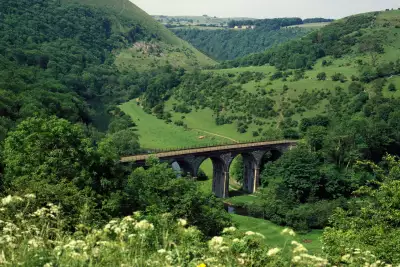
Headstone Viaduct over Monsal Dale
“In 2023, I’d see six to eight in this area during a three-hour walk; now, typically, it’s two or three. It’s extremely worrying.” So why exactly are they disappearing? “There’s no single smoking gun,” Ant explains. “Global warming means less snow, which leaves the hares more prone to predators while also drying out the moors, enabling rabbits or brown hares to move uphill; that in turn increases competition, plus the risk of disease, gut parasites and disturbance.” With this being an isolated ‘island’ population, he adds, this mountain hare colony is unable to be genetically robust.
Before and after we pass the petrifying, strewn wreckage of an American reconnaissance plane that fatally crashed here in 1948, he alerts me to more animals. Curlews, making their rhythmic, piercing call. Several more sonorous skylarks; some alarmed red grouse.
That owl again, divebombing, then two buzzards, black against the silvery sky. All are wonderful to see, but their precarious status means it’s that pair of pale mountain hares I’ll treasure most. Happily, there is a ray of hope. In his report, Dr Bedson observes that mountain hares appear more buoyant in Peak District corners where once-degraded blanket bog has been restored – as opposed to impenetrable heather. If the area’s peatlands continue to be resuscitated, their odds should improve.
It’s nearing 11am; time to head home. As we squelch back onto the Pennine Way, I glance one last time at the slopes looming behind, but no hares are visible now. I only hope they don’t soon vanish for good.
Natural Derbyshire Tours’ ‘Mountain Hare Walks’ for groups cost from £20pp; private walks cost £30-50pp, depending on the number of people; naturalderbyshiretours.uk