Brought to you by

Thailand rewards those who look beyond the brochure. Spend an extended period in the country and you’ll be met not only with postcard pretty beaches and buzzing cities – but a nuanced and fascinating destination. Ancient capitals, intact rainforest, small islands with no ATMs and mountain roads that take four days to drive await. If the latter version is what you’re seeking out from a visit to Thailand, then here’s where to find it.
Central Thailand
An hour north of Bangkok, Ayutthaya was once among the largest cities on earth – a Siamese capital of gilded spires and canal-laced avenues that left 17th-century European merchants genuinely at a loss for comparison. What survives is extraordinary: brick prangs, decapitated Buddhas, temple platforms subsiding slowly back into the plains. West of the capital, Kanchanaburi sits where the River Kwai meets dense jungle. The wartime history – the Death Railway, the bridge, the quiet devastation of the Allied war cemetery – is reason enough to come Northeast of Bangkok, Khao Yai is a Unesco-listed national park where wild elephants amble across roads and hornbills nest in the forest canopy. It also, unexpectedly, sits at the heart of Thailand’s most serious wine country. GranMonte and PB Valley produce bottles that hold their own well beyond regional novelty.
Northern Thailand
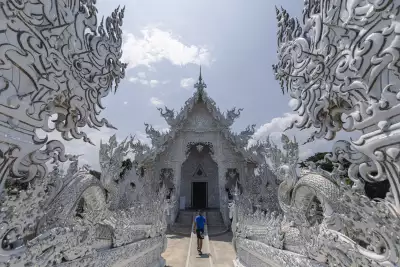
Chiang Rai-Wat Rong Khun
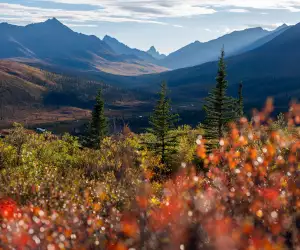
Chiang Rai is regularly underestimated. Chalermchai Kositpipat’s White Temple – an ongoing, mirror-mosaic architectural project of genuine strangeness – is one of the most singular things in Southeast Asia, and the city around it has enough Lanna temples, night markets and proximity to the Golden Triangle to justify three days without it. The Mae Hong Son loop – roughly 600 kilometres of mountain road connecting Chiang Mai, Pai, Mae Hong Son and back – is best approached as an end in itself. Drive it over four or five days. The landscape shifts constantly: mist-covered peaks, terraced rice paddies, hill-tribe villages, temples perched on ridgelines above the cloud line. Pai has a well-worn backpacker reputation, but the surrounding valleys of hot springs, bamboo bridges and open farmland are beautiful.
South West Thailand
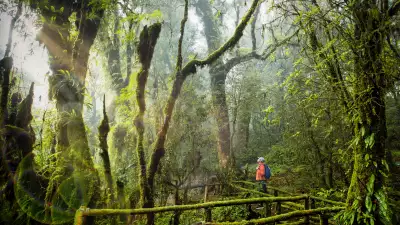
Travel north of Phuket and the density drops almost immediately. Khao Lak is quieter and more considered than its neighbours, and serves as the practical departure point for the Similan Islands – among the finest dive sites in the region, with visibility that can reach 30 metres and a marine ecosystem that includes whale sharks and manta rays between November and April. Inland, Khao Sok National Park is one of the oldest rainforests on the planet. Cheow Lan Lake – a vast reservoir ringed by karst formations that rise sheer from the water – has floating raft houses where you can spend the night Further south, the Trang coast remains largely unbuilt. Koh Libong, where dugongs graze in the seagrass beds, and Koh Kradan represent coastal Thailand at its least compromised. Koh Lanta and Krabi sit a register higher in terms of infrastructure, though Krabi’s limestone cliffs also happen to be world-class sport-climbing terrain.
South East Thailand
On the Gulf side, Khanom is a small mainland town with pink dolphins in its bay, minimal tourist infrastructure, and beaches long enough to walk for an hour without company. It pairs naturally with Koh Tao – compact, dive-focused, with warm, clear water and a reef system that rewards certification as much as casual snorkelling – or with Koh Chang, Thailand’s second-largest island, where jungle trails push through dense forest to reach bays that see nothing like the traffic their quality deserves. Koh Muk’s Emerald Cave, reached by swimming through a darkened sea tunnel and emerging into a hidden lagoon, is the kind of place that makes the detour feel obvious in retrospect.
Festivals
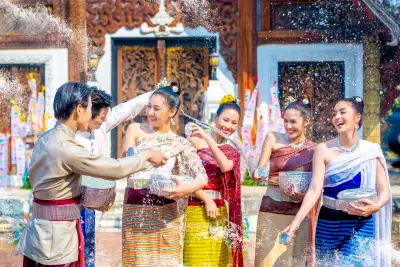
People celebrating Songkran, the Thai New Year festival
Thailand’s calendar is structured around festivals in a way that most countries’ aren’t, and timing a trip around one changes the experience considerably. Songkran, the Thai New Year water festival held each April, is the most exuberant – a nationwide, multi-day event that is best experienced outside Bangkok, particularly in Chiang Mai where it fills the old moat and runs for several days. In July the spectacular Ubon Ratchathani Candle Festival takes place in the Isan region, marking the beginning of Buddhist Lent. Come November, Loy Krathong sees illuminated floats set onto rivers and lakes across the country; in Chiang Mai it coincides with Yi Peng, when thousands of paper lanterns are released into the night sky over the city. The Chiang Mai Flower Festival in February transforms the city’s streets and Nimmanhaemin Road with elaborate floral floats. Further afield, Trang hosts its own quirky calendar highlight: an annual underwater wedding ceremony, usually around Valentine’s Day, conducted on the seabed off its islands.
Travelling slowly
The overnight sleeper train from Bangkok to Chiang Mai is one of the more pleasurable journeys in the region. Community-based tourism programmes in Mae Hong Son offer village homestays, craft workshops, and direct economic engagement with local communities. For responsible travel operators across the country check out responsiblethailand.com.
For more inspiration, itinerary ideas and destination guides visit fanclubthailand.co.uk