in association with

The first thing you notice about Maine might be the water. It slips between granite islands, laps at working wharves and fills the bays where fishing boats head out before breakfast. Then comes the smell of spruce, the sweep of a wooded headland and, somewhere beyond the coast, the promise of a wilderness that seems to stretch on forever. This is New England at its most elemental, a state where the natural world is part of daily life rather than something reserved for the weekend.
There are the familiar icons, of course. Lighthouses stand guard over rocky shores, lobster rolls arrive in buttered buns and clapboard houses line small-town streets. But spend a little longer here and a more interesting Maine emerges. Its waterfronts are places of work, its forests sustain generations of guides and craftspeople, and its restaurants draw on the abundance of cold Atlantic water and inland farms. The state has a strong creative streak, too, from boatbuilders and basketmakers to artists inspired by its clear coastal light.
Maine rewards curiosity because its geography changes so dramatically as you travel. In the south, sandy beaches and towns such as Kennebunkport give way to Greater Portland and the islands of Casco Bay. Follow the coast north to Midcoast, where peninsulas, small harbours and galleries invite detours. Farther east, Acadia National Park brings mountain trails down towards the sea, while the Downeast fishing communities and island-studded bays feel a world away from city life. Turn inland and you will find the Lakes and Mountains region, the Kennebec Valley, the Maine Highlands and vast Aroostook County. This is country made for hiking, paddling, and wildlife-watching.
Much of Maine’s outdoor access depends on trust between visitors, communities and landowners, and its rivers and harbours remain working environments. The Wabanaki Nations have lived with these landscapes for generations and their cultures are a vital part of Maine’s present. Travelling thoughtfully means choosing local guides, supporting independent businesses, respecting working shorelines and taking time to understand whose stories are being told. That can be as simple as a conversation in a village shop or a museum visit that puts the landscape in a new light.
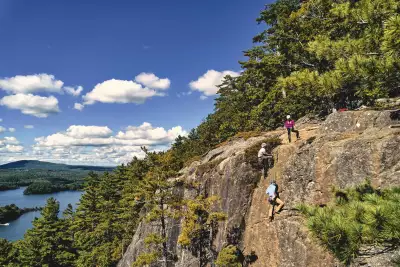
Climbers tackle granite cliffs overlooking the lakes and hills of Camden
Your gateway to New England
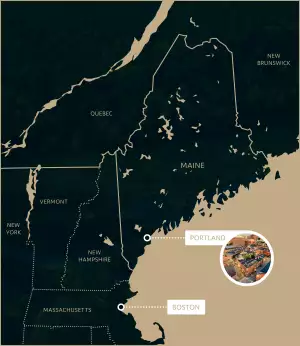
For travellers arriving from the United Kingdom, Boston in the neighbouring state of Massachusetts provides a convenient starting point to embark upon your journey. Direct transatlantic flights connect Britain with Boston, after which Maine can be explored by road or, for an introduction to its southern communities, on the Amtrak Downeaster rail service to Portland, Freeport and Brunswick. Hiring a car gives you greater flexibility to push onwards to Acadia, inland lakes and the North Woods. A Maine trip also works naturally as part of a wider New England itinerary, with Boston, the New Hampshire border and the coast all clearly connected on the map.
Four seasons, four different Maines
When summer arrives, Maine locals and visitors take to kayaking, island-hopping and sailing aboard traditional windjammers, along with long evenings at waterside lobster shacks. Autumn sets the forests alight with red, gold and orange, especially along mountain trails and scenic byways; orchards and harvest gatherings add to the appeal. Winter swaps kayaks for skis, snowshoes and fireside evenings in the woods. Come spring, the days lengthen and quieter coastal towns begin to stir. Each season has its own draw, and every region offers a different way into the state.
The call of the coast
With working harbours, seabird colonies, far-flung islands and a rich seafaring history, Maine’s shoreline is best experienced from the water and through the people who make their living on it
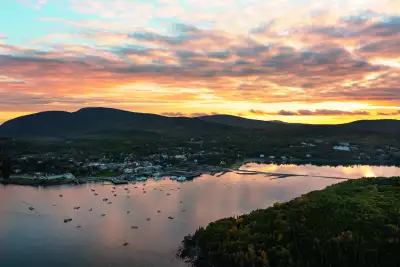
Serene skies over Bar Harbor
Maine’s coastline resists a straight line. It curls around sandy beaches in the south, breaks into sheltered bays and peninsulas along the Midcoast and eventually fragments into a maze of rocky islands and fishing villages farther east. Each headland offers a different view: a stand of spruce overlooking the Atlantic, a red-roofed boathouse, a lighthouse catching the afternoon sun.
Start in the south, where Kennebunkport’s busy waterfront and the beaches of southern Maine make an easy introduction. Beyond Portland and Casco Bay, the towns of Bath, Boothbay Harbor, Rockland and Camden trace a coastline shaped by shipbuilding, fishing and trade. On Mount Desert Island, Acadia National Park offers the rare pleasure of walking from wooded trails and granite summits towards views of the open ocean. Keep travelling east and places such as Lubec and Eastport are ideal for those prepared to venture beyond the most familiar stops.
Take the sea route
A sea kayak gets you close to the detail: seals lifting their heads from the water, ospreys circling above and small islands that barely register from the road. Maine Kayak runs trips near Pemaquid, Maine Island Kayak Co explores the coast’s island ecosystems, and Coastal Kayaking Tours offers ways to see the Bar Harbor and Acadia area from sea level. Trips range from short introductions to longer expeditions, so there is an option for newcomers as well as confident kayakers. Experienced visitors can also investigate the Maine Island Trail, a long-distance coastal route connecting islands and mainland sites.
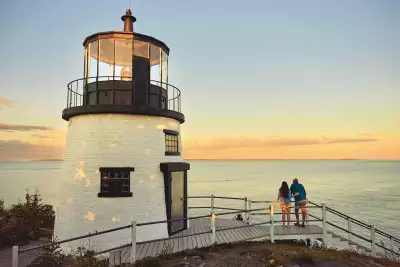
Owls Head Light stands watch over rocky Midcoast
Michael Wilson
For a different perspective, step aboard a windjammer. These traditional sailing vessels recall an era when schooners carried goods between island settlements; today’s voyages weave through Penobscot Bay and Casco Bay, past working harbours, offshore islands and lighthouse stations.
Wildlife and working waters
Maine’s offshore waters are home to puffins and other seabirds, with Hardy Boat Cruises among the operators offering trips to see them. Whale-watching boats leave coastal hubs such as Bar Harbor and Eastport. There is an equally memorable education to be had closer to shore. With Rugosa Lobster Tours in Kennebunkport or Lucky Catch Cruises in Portland, visitors can learn how traps are hauled, why certain lobsters are returned to the sea and what life on a working boat involves.
Maine’s lighthouse towers have watched over commerce and fishing for generations
Back on land, Portland Head Light and Marshall Point Light Station offer two classic stopping points, while small harbours make places to linger over seafood and conversations. There is history in almost every detail.

Summer days at Belgrade Lakes
Maine’s lighthouse towers have watched over commerce and fishing for generations; museums and local historical societies preserve the stories of shipyards and coastal households. But the most revealing encounter might be seeing traps stacked beside a wharf, a schooner returning on the evening tide or an oyster farmer explaining the changing seasons. Keep your itinerary loose enough for those moments, especially on the smaller peninsulas and islands where getting there is half the fun.
Into the wild
There is another side to Maine beyond its better-known coastline – an inland landscape of mountains, rivers and forests that invites you to lace up your boots, launch a canoe and go a little further
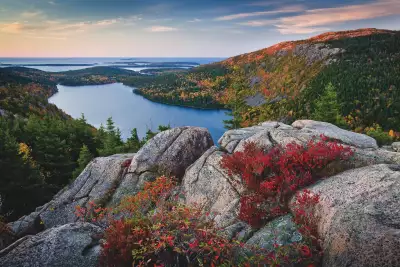
Epic views at Jordan Pond Acadia National Park
Susan Cole Kelly
Look at Maine on a map and you realise how much of it lies inland. The North Woods sweep towards the Canadian border; lakes and rivers thread through the forest; and the mountains rise above valleys that change colour dramatically with the seasons. It is a landscape that rewards self-reliance and an appetite for adventure, whether you prefer a woodland walk, a day on the water or several nights beyond the reach of mobile signal.
Reach for the summits
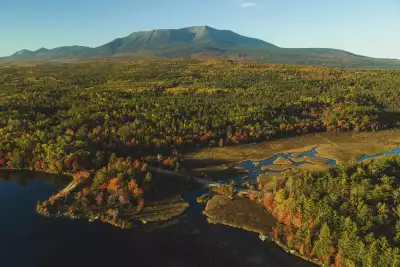
Katahdin, the state’s highest mountain, also marks the northern end of the Appalachian Trail, and its exposed ridges demand preparation, the right kit, and a realistic assessment of the weather. Acadia’s granite peaks deliver sea views with a very different backdrop, while Camden Hills, overlooking Penobscot Bay, offers memorable trails closer to the coast. Inland, the Western Lakes and Mountains region opens another network of forest paths, ridgelines and scenic drives. Autumn is compelling when the foliage turns the hills gold.
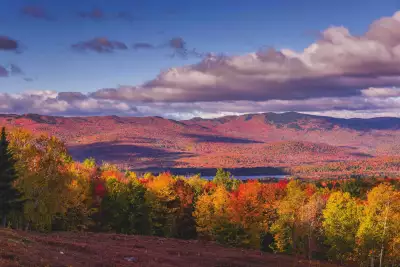
Jaw-dropping mountains and trees at autumn in Weld, Maine
Cynthia Farr-Weinfeld
The long way round
Maine is particularly satisfying on two wheels. Acadia’s historic carriage roads take cyclists over stone bridges and through wooded valleys without the distractions of motor traffic. Farther inland, gravel roads stretch through the Maine Woods, with Appalachian Mountain Club lodges such as Medawisla and Gorman Chairback serving as bases for rides. If you enjoy rock climbing, guides in Acadia and the Camden Hills can introduce you to the state’s granite cliffs.
Water, wildlife and the North Woods
Moosehead Lake invites a slower journey by canoe, while the Allagash Wilderness Waterway offers a more ambitious route through remote forest country. On the Kennebec and Dead rivers, rafting trips from The Forks trade calm water for thrilling whitewater, with experienced guides navigating the rapids. Wildlife adds another dimension: moose can be spotted in the Maine Highlands, the Kennebec Valley, Aroostook County and western lake country. An overnight stay in a traditional sporting camp or wilderness lodge is a fitting way to finish the day under dark skies.

Riding in Saddleback Mountain Bike Park
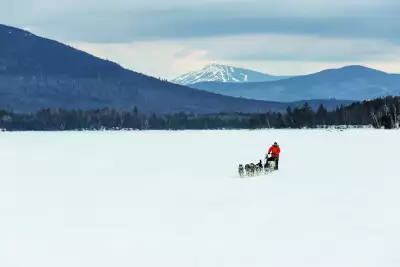
Dog sledding in Lake Umbagog, on the edge of the White Mountain National Forest

Hiking in Peaks-Kenny State Park
Michael Wilson
The seasons offer different invitations into the same terrain. In late summer, clear nights bring opportunities for stargazing; in autumn, the routes around Rangeley and Moosehead Lake are framed by changing leaves. Snow turns trail networks into places for skiing and snowshoeing, while winter lodges make a warm base for exploring. No matter the month, check local conditions, especially on remote trails and water routes where weather can change quickly.
Registered Maine Guides are an important part of this tradition, passing on outdoor knowledge and helping visitors experience the state responsibly. Follow marked routes, respect working forests and waterways, and leave fragile places as you found them.
A taste of the good life
From lobster shacks and oyster farms to inventive kitchens, artists’ studios and community traditions, the people of Maine are as compelling as the places they call home – their stories are part of every visit
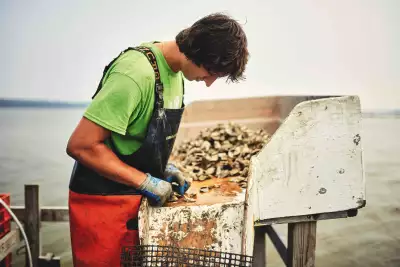
A fisherman shucking freshly caught oysters in Maine
Mark Fleming
In Maine, a good meal often comes with a view of where it all began. Lobster arrives at a picnic table within sight of the boats that brought these crustaceans ashore; oysters are harvested from cold, clean inlets; apples, potatoes and wild blueberries connect the state’s cooks to its farms and seasons. Portland has earned growing attention for its restaurants, but to understand Maine’s food culture you need to follow it across the state, from working waterfronts to inland orchards and country markets.
Eat your way around Maine
In southern Maine, Chauncey Creek Lobster Pier at Kittery Point is a classic waterside stop, while Kennebunkport’s Port Fish and Chop House adds a more polished take on New England cooking. In the Greater Portland area, Allagash Bungalow in Scarborough brings together locally brewed beer and Bite Into Maine lobster rolls. In the Midcoast, McLoons Lobster Shack on Spruce Head Island and Five Islands Lobster Co. in Georgetown give visitors an excuse to pull off the road and eat beside the sea. Farther east, Abel’s Lobster in Northeast Harbor serves seafood near Acadia, while Beal’s Lobster Pier in Southwest Harbor offers another connection to a working harbour.

Browsing a farmers’ market
Michael Wilson
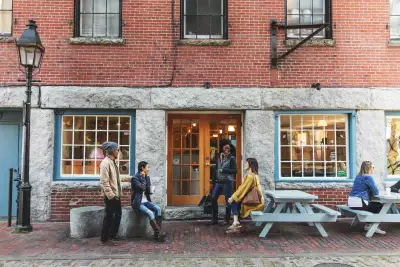
Old Port, a historic district in Portland
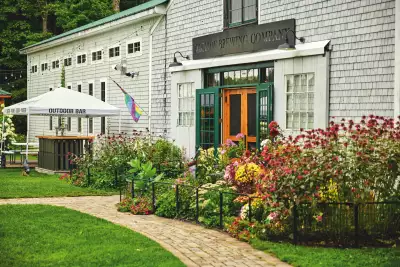
The Bigelow Brewing Company, a craft brewery in Skowhegan
Clayton Simoncic
The journey should continue inland. Toddy Pond Farm in Monroe has offered seasonal farm dinners built around its own livestock and local produce, while Morrison Hill Orchard in Farmington combines apple picking, cider and wood-fired pizza. Farmers’ markets in places such as Bath, Belfast, and Bangor are a useful way to meet local growers and makers. Be sure to check seasonal opening times and current menus before travelling, particularly for summer-only restaurants and farm events.
More than a lobster roll
Maine’s Oyster Trail links farm visits, tastings and restaurants along the coast, with businesses offering everything from a seat at a raw bar to a trip out on a working oyster farm. The state’s wild-blueberry harvest adds another distinctive flavour, and its craft breweries make appealing stops after a day outdoors. The point is as much about meeting producers as it is about finding a favourite dish: food here is tied closely to the land, sea and the communities that care for them.
Made in Maine
That connection to place extends into the arts. Rockland’s Farnsworth Art Museum, the Tides Institute & Museum of Art in Eastport and the wider Maine Art Museum Trail reveal a long creative tradition, from coastal painting to contemporary craft. Maine is also the ancestral homeland of the Wabanaki Nations. Museums such as the Abbe in Bar Harbor and Indigenous artists themselves offer opportunities to learn about living cultures and traditions. Taking time to meet a maker, visit a gallery or join a workshop can change how you see the landscape beyond its postcard views.

An outdoor farm-to-table culinary event at Salt Water Farm in Maine
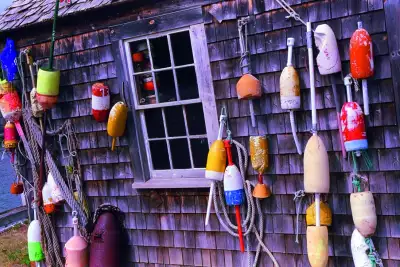
An iconic scene of colourful lobster buoys surrounding a multi-pane window in York Harbor
There are plenty of ways to meet the people behind the work. A class at a craft school, a boatbuilding workshop, an artist’s open studio, or a conversation at a farm stand gives the journey a texture no checklist can provide. These meaningful encounters offer a deeper understanding of Maine and the people who call it home.
For more regional ideas and help planning a trip, visit visitmaine.com