Don’t you dare use the word ‘pristine’ to describe the wilderness in the Yukon,” Amber Berard‑Althouse tells me over beers at Klondike Rib & Salmon in Whitehorse. She is Tlingit – a member of Kluane First Nation and the Agunda, or Wolf, clan – and has spent more than a decade giving interpretive talks on Yukon First Nations culture, beginning at Kluane National Park and Reserve, which sits within her ancestors’ traditional territory. “The land is the way it is because my people have looked after it for thousands of years.”
Her tourism company, The Land Heals, helps visitors understand the history and lived experience of contemporary Indigenous people in this northern corner of Canada. I’m about to spend two weeks traversing the Yukon Territory by foot, gravel bike and canoe on an expedition with Rat Race, and I’m keen to learn as much as possible.
Berard‑Althouse sketches the complicated history of this country and the way her generation has tried to return to the land after the schism of the 20th century, when residential schools removed families from the territory they had occupied for thousands of years.
We walk through Whitehorse, pausing to glean yarrow flowers for stomach‑settling tea, or to finger fireweed while Berard‑Althouse explains its anti‑inflammatory sap. She knows the meadows, riverbanks and taiga forest the way most people know their own garden: its medicinal logic, its seasonal tempers.
But it’s her distinction between a landscape that is well‑kept and one that is supposedly untouched that lands hardest – the difference between a place with a human memory and a place imagined without one. The point cuts clean, like a corrective paddle stroke.
Carcross
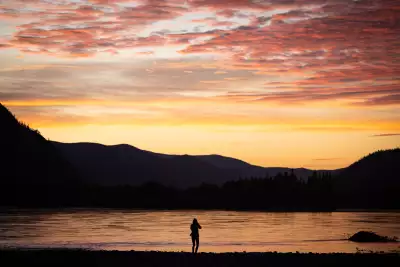
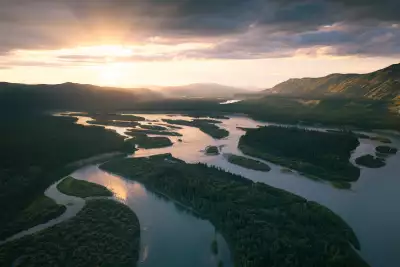
I pack it all away and board a transport van south from Whitehorse to Carcross (shorthand for ‘Caribou crossing’), the hinge where Alaska, British Columbia and the Yukon Territory join. The latter is named for the Yukon River, which begins as glacial meltwater at Llewellyn Glacier and Lake Lindeman in British Columbia and flows northwest for 3,190km through the Yukon Territory and Alaska before reaching the Bering Sea. Along the way, it absorbs sediment and scale, its surface colour shifting with the mineral load and the quality of light like a chameleon – ice-blue at its tip and milk-white at its tail, pewter in rain, hammered copper in the midnight sun.
It is the third-longest river in North America and has drawn people to its banks since time immemorial: the Tagish and the Northern Tutchone, who understood it as a living system and set up fishing and hunting camps along its span; and later the gold rush opportunists, among them one Friedrich Trump, grandfather of the current US president, who came north in 1898.
Adventure writers followed – Jack London, Robert Service – and their versions of this wild and beautiful place stoked the fires of my father’s childhood daydreams. I’ve longed to see the Yukon since before I understood what longing meant.
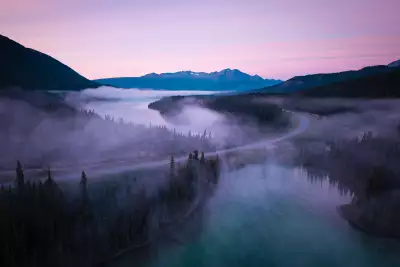
Morning mist rises from the surface of Emerald and Spirit Lakes
James Appleton
I’m here with Rat Race, an adventure events company, on a test expedition to see whether a traverse of the territory might work on a larger scale. Our group includes expedition leader Abbi Naylor; Maria Russell, a professional skydiver who has come straight from a 200‑mile mountain race in Kyrgyzstan; John Hall, a retired psychiatrist and ballroom dancer who tows a truck‑and‑trailer he calls Dollywood; and Ian McLaren, a veteran of Britain’s Spine and Dragon’s Back races and a regular participant on Rat Race Test Pilots.
Rat Race founder Jim Mee describes Test Pilots as “a particular breed of adventurer – resilient, flexible, and very much up for the adventure,” and warns that the plan will frequently change. We discover this early. An Air Canada strike almost prevents three of us from reaching the Yukon, and I nearly immolate the dry cabin I’m staying in when I misjudge an electric kettle over a propane stove, saved only by a conveniently placed fire extinguisher.
The original itinerary included the full Chilkoot Trail, the 53km crossing fortune‑hunters used to haul supplies from the Alaskan port of Skagway into the Yukon, but the closure of the US-Canada crossing during Trump’s presidency has put the route beyond reach – ironically, it’s his grandfather’s corridor north that we are no longer allowed to walk.
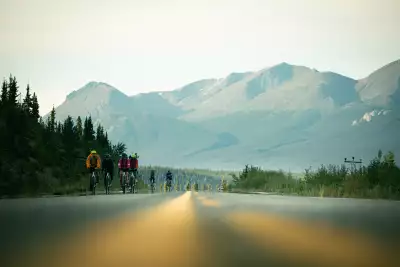
Cycling from Carcross to Dawson City
James Appleton
Lake Lindeman
We trek the Canadian section instead, taking the historic White Pass and Yukon Route railway from Carcross to Bennett; steam lifting from the boiler and dissipating into the mountain air as the train winds along a narrow-gauge railway through scenery of theatrical scale.
Bennett, formerly a Klondike-era boomtown where Friedrich Trump and his partner Ernest Levin ran the Arctic Hotel and sold food, drink and (allegedly) sex work to stampeders, is now very much the opposite, ghostly empty when the locomotive trundles out of sight, leaving us alone on the banks of the glacial basin – the headwaters of the Yukon.
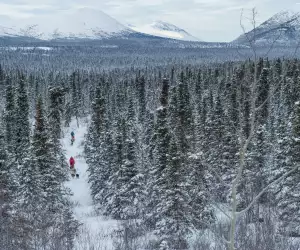
Lake Lindeman’s silted surface scatters light into bright jade and turquoise tones. We walk past the weathered boards and spire of St Andrew’s Presbyterian Church, the only surviving gold-rush structure at Lake Bennett, and are quickly devoured by the wilderness – a sandy section among lodgepole pine gives way to a tight woodland trail tangled with rocks and roots, through thick boreal forests of white spruce thicketed with paper birch and aspen.
We continue for 12km, then set up tents at a historic boat-building camp at the lake’s outlet, where I fetch water with Trevor Bailey, a semiconductor expert with the type of chiselled physique that would make a Greek statue body dysmorphic.
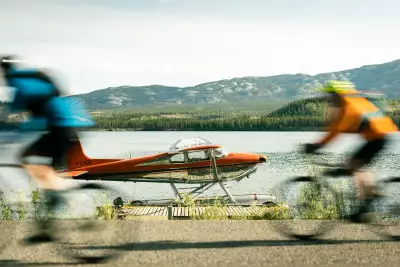
We ride beyond Miles Canyon, where floatplanes lift from polished reaches of water
James Appleton
I recount to him what Amber had told me about bears. For many Indigenous communities, calling out the word ‘bear’ while hiking (a common preventive practice in North America, such as wearing bear bells) beckons them toward you, rather than warning them off. We chat loudly instead, keeping a steady grip on our cans of bear spray.
The next day, we exit the same way we entered, rent gravel bikes and cycle 10km uphill to Spirit Lake Motel, where we eat chow mein and drink local beer. After everyone has gone to bed, I wander outside barefoot to jot down some notes in my journal and promptly lock myself out of my room.
The staff have all gone home, and there’s nobody around to let me in. In the true spirit of a Rat Race test pilot, I pop the metal screen off the window and use a chip of pine I find on the ground to slide beneath the latch and lever it up. I sleep soundly, dreams animated with a newfound appreciation of breaking and entering.
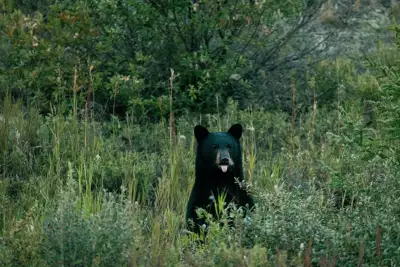
Black bears often favour the highway verges
James Appleton
Cycling to Carmacks
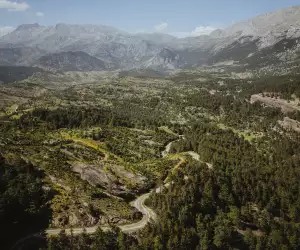
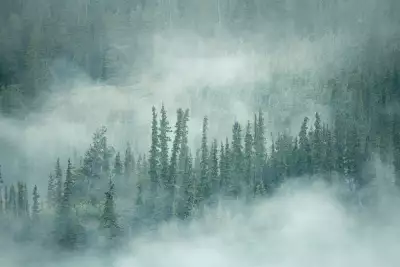
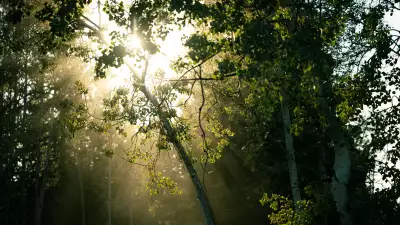
Two days of gravel cycling follow – 253km from Carcross to Carmacks along the South Klondike and Alaska highways. On the first morning it is colder than expected, close to freezing. Blue mist seeps from lakes and woods like dry‑ice smoke. Within ten minutes, an ice‑cream headache creeps around my temples, after half an hour I’m shivering like an aspen. But the mercury rises with the sun, and the mountains fall back as the land opens into broad river valleys thick with spruce.
We ride beyond Miles Canyon, where floatplanes lift from polished reaches of water, past Whitehorse, and north into a landscape increasingly untethered from human scale: muskeg and marsh stretching to the horizon, wildfire‑blackened hills ceding to fresh growth, the Yukon River threading through immense valleys beneath a sky that seems to dilate.
At Carmacks, the evening before we load the canoes, I sit alone on a gravel slipway beneath a faded-blue iron truss bridge and watch the Yukon lap at the heel of my boot in the blurred threshold between land and water.
The landscape is increasingly untethered from human scale: muskeg and marsh stretching to the horizon, wildfire‑blackened hills ceding to fresh growth, the Yukon River threading through immense valleys beneath a sky that seems to dilate
James Appleton
The river moves with the weight of industry, sliding past like a freight train at ten kilometres an hour, its surface alive with swirls, countercurrents, boils and upwellings where submerged rock disturbs the flow. I say my goodbyes before slipping out of phone reception for seven days.
We offload four canoes at Coal Mine Campground, loading 60-litre barrels and dry bags with enough equipment and provisions for a week on the water. On the bank, we practise our strokes: the power stroke, bow to stern; the J stroke, in which the stern paddler uses the blade as rudder; the pull stroke and its opposite, the pry – a handful of middle-aged canoeists mime-paddling on a gravel bank in the early light is not a dignified spectacle.
We walk the boats down the launch, scramble into them and push off from the eddy.
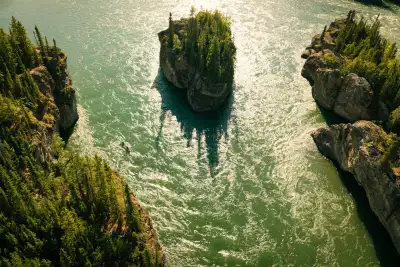
Five Finger Rapids
James Appleton
The Yukon River
The swiftness of the river is startling. Within an hour we cover well over ten kilometres, and a good paddler tends to be defined more by steering than strength. Accustomed to earning progress through effort, I cut zigzags across the flow. Canoeing here is more about cooperation than propulsion: reading the water, avoiding sweepers and gravel bars, and making small corrections while the river gets on with the business of moving an entire continent’s worth of meltwater towards the Bering Sea.
It takes time to trust the boat, particularly when the group becomes strung out or we have to paddle aggressively across the current to reach the correct side of an island or slough, one of the many anabranching channels shaped by the Yukon’s movement.
40km downstream comes Five Finger Rapids, where four basalt pillars squeeze the river into a series of fast, frothing channels. We line up on the rightmost passage, read the riffle, commit to the line and feel standing waves lift the canoe beneath us. A few seconds later it is over. We are through, still dry, and the riskiest section of the journey is out of the way.
Rink Rapids arrive soon after, where the sternwheeler paddleboat SS Casca came to grief in 1936. This also marks the supposed resting place of Sam McGee’s ashes, where the real Yukon current brushes up against the imagined furnace glow of Robert Service’s poem ‘The Cremation of Sam McGee’. I recite it to the group at our first campsite on a mid-channel bar, as the campfire crackles and 9pm sun cuts a starburst through the woodsmoke.
Afterwards, we stash our food in bear barrels beneath the upturned canoes, wash in the river, and trade jokes and stories before turning in. The late-setting sun still illuminates the walls of my tent as I drift off, listening to the murmur of the current.
Backcountry travel quickly settles into a rhythm. We wake at first light, rehydrate rations and brew coffee, strike camp, stow our kit in the canoes and head downriver, paddling for nine hours a day and averaging 80km.
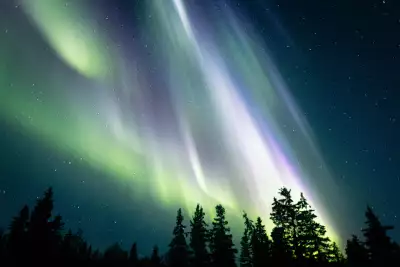
The aurora borealis over Fort Selkirk
James Appleton
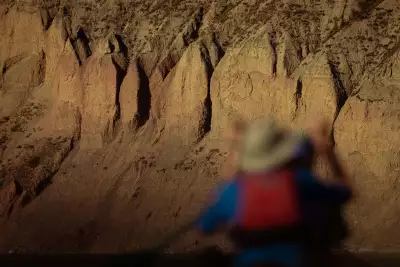
Endless reaches of black and white spruce sweep up 500-metre ridges, so dense that they look digital, while deciduous trees like willow, cottonwood, aspen and birch fringe the downstream banks. Ochre hoodoos erode into cutbanks, their reflections swaying on the water’s surface.
The Arctic sun is bright and penetrating; a hat or buff soaked in the river provides refrigerant relief. Each evening we pull onto a gravel bar, scan it for prints – wolf and bear sign are common – bathe, collect driftwood, light a fire, eat, sleep and begin again.
Wildlife is more sparse than expected at this latitude in the late summer, but animal spoor is omnipresent, whether it’s the pungent fug of beaver and muskrat or the nest of a raptor. Bald eagles are the most common we encounter, broad wingspans wheeling above, the weight of their bodies bending riverside alders.
Ducks travel together in funny-looking flotillas – mallard, teal, scaup, and goldeneye – the latter seem to stand on their feet and sprint in unison – while snow geese fly south in great chevrons as the river churns northwards.
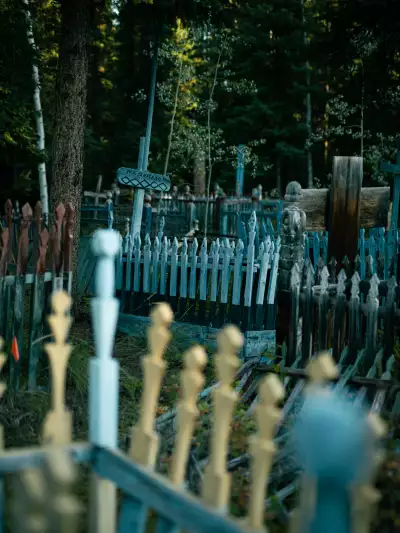
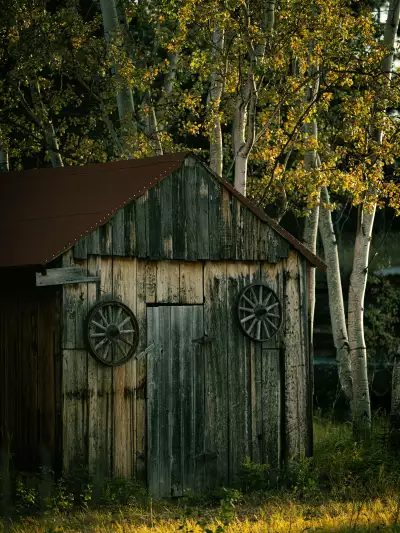
Fort Selkirk
On the third day on the river, we make camp at Fort Selkirk, at the confluence of the Pelly and Yukon. Northern Tutchone and Tlingit peoples occupied this ground for thousands of years before European contact. In 1848, the Hudson’s Bay Company built a trading post here; the following year, Tlingit traders burned it to the ground – one of the few successful armed resistances against the HBC in Canadian history, a fact that tends to receive less attention than it merits.
The settlement was rebuilt during the gold rush and briefly flourished before declining as river traffic faded and the sternwheelers stopped running in the 1950s. Since the 1980s, members of the Selkirk First Nation have returned to care for the site.
I walk through Fort Selkirk in the evening, the air alchemised to a deep, resinous gold. Silence permeates the scenery: a church, a Mounted Police post, a line of battered cabins settling back into the ground. A path leads through dense conifers to a First Nations graveyard in a clearing, where each grave is enclosed by a small painted fence – reds, blues and yellows bright against the dark of the trees.
Much of the paint is fresh. The colours feel like care made visible: evidence of people returning, season after season, to tend their dead in a place from which they were once displaced.
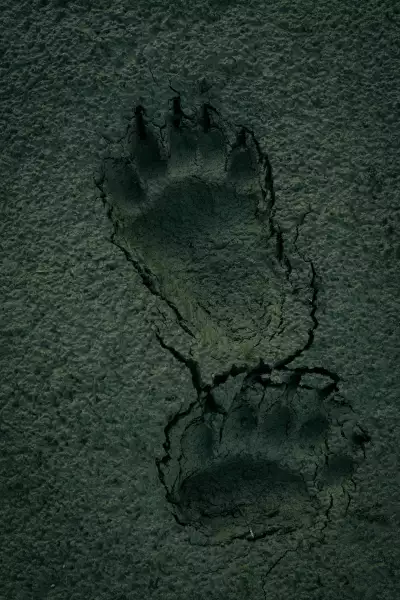
Bear spoor on a gravel bar
James Appleton
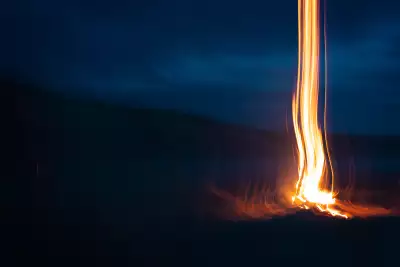
Later that night, I wake to photographer James Appleton rattling the frame of my tent. “Nick, get up. Northern lights.” He has extensive experience with the aurora borealis. In 2010, he became the first photographer to simultaneously capture a volcanic eruption with the northern lights, at a fissure on the flanks of Eyjafjallajökull in Iceland. When I poke my head out, a pale featureless arc is low on the northern horizon. Then, the sky erupts – a sine wave of green light swimming across the sky like an enormous electric eel.
“This is just like Iceland,” says Appleton. “It was coming toward me like a dragon.” I descend the steep bluff and sit at the water’s edge, watching it reflect on the Yukon, the experience welding itself into memory.
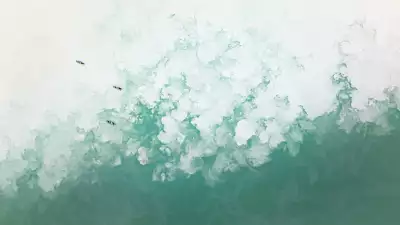
The waterway changes as we continue downstream. The White River enters from the south, carrying one of the heaviest sediment loads on the continent – glacial silt and volcanic ash deposited over a thousand years of eruptions in Alaska. The two rivers run side by side before mixing, the White folding into the dark-green Yukon like milk stirred into coffee. As the paddle sinks into the water, the current thickens at the blade.
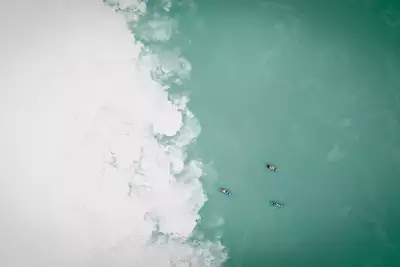
The confluence of the White and Yukon Rivers
James Appleton
Into Dawson
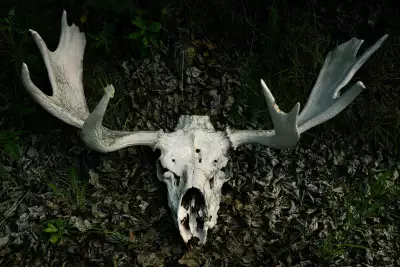
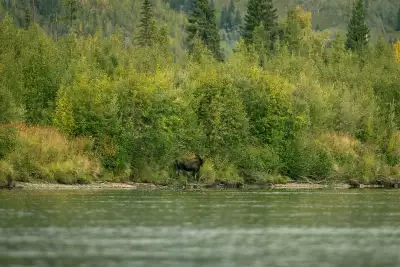
Paddling around a riverbend, tiny white forms cling to a sheer maroon rock face, perhaps a hundred metres above. Squinting to see more clearly, we realise that they are Dall sheep, trusting friction to defy gravity while they feed on rugged woody plants. A trio of flighty moose huff before vanishing into the willows. Later, while lunching next to a copper mine, we discover a moose skull with a bullet hole through its frontal bone.
Our expedition leader loves bears. Abbi Naylor has been scanning the banks hopefully since Carmacks. On the fifth day, when I tell her how Amber Berard-Althouse had instructed me never to say the word ‘bear’ unless I wanted to see one, she decides to put it to the test, shouting it across the water once, twice, three times, four.
On the fifth call, unbelievably, an ursine form appears on a wooded island along the river’s eastern margin. The black bear pauses to consider, and we assume it will retreat into the puckerbrush. Instead, it plunges into the water and begins swimming straight through the cluster of strange craft bobbing along its surface.
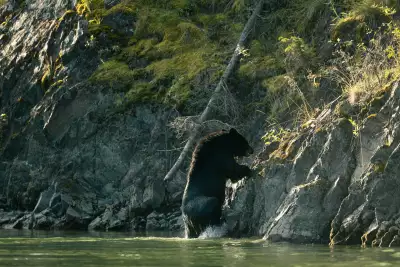
A very literal bear call
James Appleton
The animal crosses the full width of the Yukon and comes ashore on a steep incised bank 30 metres from the canoes, alone and backlit by the morning sun, chill water streaming from its fur. Then it bounds up into the spruce, disappearing into the dim understory.
It feels too improbable for reality. Maybe it’s a coincidence, or maybe, after millennia of stewarding the wilderness, First Nations people learned to listen with ears more finely attuned to nature’s signals. Either way, the current catches our canoes to pull us north.
We finish a day ahead of schedule, just as the rain begins to fall. Small buildings and mown fields begin to interrupt seemingly endless ranks of trees. Dawson City resolves from the bluffs – first a smudge on the horizon, then painted wooden buildings strung along the floodplain, long docks and steamboats and curious barges crowned with antlers and stovepipes.
I think of Amber picking yarrow beside the road in Whitehorse, the painted fences at Fort Selkirk, the bear streaming and effulgent in the morning light. For thousands of years, people have travelled this river, drawn sustenance from it, fought over it, told its stories and returned. The Yukon is not a wilderness emptied of human presence. It is shaped by it.
Rat Race designs and operates unique adventures on all seven continents. Every event is crafted in-house by their experts, with over 50 extraordinary adventures to choose from; ratrace.com