While a city is often judged by the size of its skyscrapers, the reliability of its transport systems and its GDP, the secret weapon of a great metropolis is its green spaces – one of London’s most underrated features as one of the world’s leafiest cities. Browse any guidebook, and you’ll find a link to a botanical garden, a sprawling specialist collection of flora, with glasshouses, shadehouses, and tropical and native plants. The very best tell the story of a city through its nature, soil and climate.
Historically, botanical gardens weren’t just for tourists or dates looking for alternatives to the pub. They were horticultural havens, beacons of scientific research, the botanical equivalent of going to the zoo without the moral uncertainty (keeping plants in captivity is, as of yet, uncontroversial).
The first botanical garden in Europe was established back in Pisa in 1544 under the Grand Duke of Tuscany, Cosimo I de’ Medici. It was attached to the university under the care of famed botanist Luca Ghini. Today, many gardens around the world are used for recreation rather than research, and there is some dispute as to the level of scientific activity necessary for a garden to truly be accepted as ‘botanical’ – admittedly a niche controversy. However, many still do play a crucial role in education and research. Best of all, thanks to numerous gardens being state-owned, many are completely free to enter – perfect for the frugal traveller. Come for the oasis of calm and green, stay for the adult biology class.
Kew Gardens
London

Palm House at Kew Gardens
Founded in 1759, Kew Gardens is not only the oldest on this list, but one of the largest and arguably the most famous botanical institutions in the world. Set over a whopping 300 acres, it is also one of the most diverse on the planet complete with a world centre for research and conservation. From the Palm House and Temperate House to the treetop walkway offering panoramic views across the gardens, it’s one of only three tropical Unesco-listed botanic gardens. There’s a reason over two million visitors make the pilgrimage out to Kew every year.
Kirstenbosch Botanical Garden
Cape Town

Tree canopy walkway at Kertsenbosch
South Africa is home to an extraordinary array of plant life, which can be found at the Kirstenbosch National Botanical Garden, nestled along the eastern slopes of Table Mountain just outside of Cape Town. Founded in 1913 to focus on local flora, the landscaped gardens showcase indigenous fynbos (distinctive heather-like plants) from the Cape floral kingdom. Visitors will want to take a stroll through the jewel in the crown – a suspended tree canopy walk high in the trees, perfect for sweeping views of the gardens and Table Mountain.
Missouri Botanical Garden
St. Louis
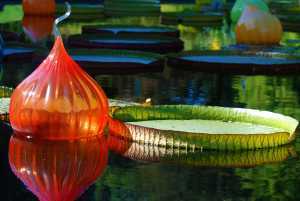
Lilypad at Missouri Botanical Garden
The botanical garden in St. Louis is one of the oldest in the United States, founded in 1859 and set amid a whopping 32 hectares of horticultural diversity. It was created by the British-born philanthropist and botanist Henry Shaw, back when philanthropy was more geared toward exploring niche interests than reputation laundering and tax evasion. Wander through a tranquil Japanese strolling garden, an Ottoman garden, the oldest continually operated public greenhouse west of the Mississippi River, and the world’s first geodesic dome greenhouse used as a plant conservatory.
Singapore Botanic Gardens
Singapore

Walkway at Singapore Botanical Gardens
From its airport to its F1 race, Singapore does everything just a little bit extra, and its botanical garden is no different. Not to be confused with the Avatar-like flower domes at the Gardens by the Bay, the actual botanical gardens are one of only three, and the only tropical garden to be honoured as a Unesco World Heritage Site, after Kew and Padua. Founded in 1859, its importance is evident throughout the city. Research at the facility enabled the successful cultivation of rubber trees in Southeast Asia, helping transform Singapore into a major trading hub under British rule. Today, it’s become a model for the city’s urban greening.
Royal Botanic Garden
Sydney

View of the Opera House from the Royal Botanic Garden in Sydney
How’s this for legacy – founded in 1816, the Royal Botanic Garden in Sydney is Australia’s oldest scientific institution. Discover a green oasis in the heart of the city, complete with stunning views along the harbour between the Sydney Opera House and Harbour Bridge. The landscaped gardens showcase both Australian native plants and global species, with highlights including the Calyx, one of the largest vertical floral walls in the Southern Hemisphere, and the enormous array of animals that also call the gardens home, from bird species like the masked lapwing and white ibis to the flying fox.
Rio de Janeiro Botanical Garden
Rio de Janeiro
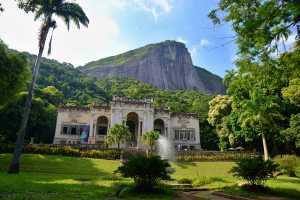
View of Cristo Redenter at Rio de Janeiro Botanical Garden
The botanical garden in Rio has one of the more interesting origin stories, born out of a desire for produce rather than research. King John VI of Portugal founded it and initially focused on the acclimatisation of spices such as nutmeg, pepper, and cinnamon imported from the West Indies. It wasn’t even open to the public until 1822. Only 42% of the park is cultivated, the rest is made up of the encroaching Atlantic Forest rising up the slopes of Corcovado Mountain. Birds like toucans and other tropical species, monkeys and marmosets can be spotted among the trees, and the iconic Cristo Redentor looms large on top of the nearby Corcovado mountaintop, if the plants aren’t enough.
National Botanic Gardens
Dublin
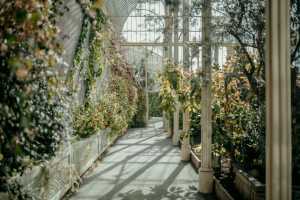
Glasshouse at National Botanical Gardens in Dublin
Just three kilometres from Dublin’s city centre, the botanic gardens are home to over 15,000 species of plants from around the world and seven key glasshouses. Highlights include restored historic glasshouses and plants of impressive rarity – over 300 endangered species are on display, six of which are now extinct in the wild. Opened in 1795 by the Dublin Society, it’s one of the oldest scientific gardens in Ireland.
Denver Botanic Gardens
Denver

Glasshouse at Denver Botanical Gardens
From the dome of the Boettcher Memorial Tropical Conservatory to the painterly waterlilies of the Monet pool, the Denver Botanic Gardens makes its mark both inside and outside. Set against the foothills of the Rocky Mountains, it has North America’s most extensive collection of plants from cold-temperate climates worldwide and was one of the first gardens in the US to emphasise native plants and sustainable practices like water conservation and biological pest control. It’s also a hotspot for weddings if you can get a booking, with rental suites amid tropical plants, a rustic barn and even an open-air chapel.
Jardín Etnobotánico de Oaxaca
Mexico

Cacti at Jardín Etnobotánico in Oaxaca
One of the smaller entries on the list, Oaxaca’s jardín nonetheless possesses a kind of magic; often seen under a crystal-clear, cobalt-blue sky, and it’s a rarity in that actually getting to see it is not easy. There’s no online booking, and only a handful of daily group tours are available, the only way to explore the garden. Founded in 1990, it focuses on the indigenous flora of Mexico’s most biodiverse region and its relationship with people, from traditional uses for cooking, medicine, art, textiles, dyeing and ritual purposes. Its hyperlocality and exploration of the importance of horticulture in Oaxaca’s history make it something of a living cultural archive.
Desert Botanical Garden
Phoenix

Flora at Desert Botanical Garden in Arizona
First opened in 1939 as a non-profit, the Desert Botanical Garden in Phoenix is one of only 24 botanical gardens accredited by the American Alliance of Museums. For visitors, it’s one of the best opportunities anywhere in the world to immerse themselves in its unique desert flora. Species include cacti, aloes, agaves and rare and endangered desert species. Burgeoning plant parents may know cactus as one of the easiest to keep alive, even in hostile environments, but this garden is crucial to our understanding of it and other arid plant life.