Brought to you by

Switzerland’s largest city trades its traditional reputation for lake swims, natural wine and an exploding snowman. Here is how to spend a weekend in it, whatever the season.
Ask most people what they picture when you say Zurich and the answer tends to involve banks, watches and briefcases. While that isn’t factually incorrect, the city has so much more to offer than business.
Zurich is where plenty of people keep a bathing costume in their work bag and think nothing of finishing for the day, walking down to the river and swimming into the late evening.
Set where Lake Zurich narrows into the River Limmat, with the Alps rising in the distance and Uetliberg – the city’s own mountain – just 20 minutes away by train, Zurich has mastered a balance that many European cities aspire to.
It is compact enough to explore on foot, yet nature is never more than a tram ride away. Mornings might begin with a hike or an open-water swim before museums, boutiques and neighbourhood wine bars take over the afternoon. Increasingly, Zurich feels less like a financial capital and more like one of Europe’s most engaging city breaks. Here’s the case for visiting, one season at a time.
Spring
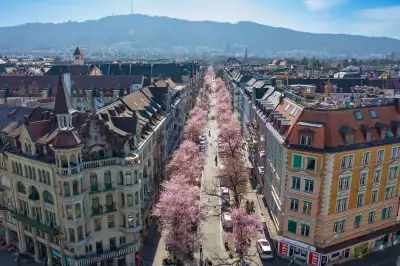
Cherry blossoms lining the Zurich streets
Winter officially ends on the third Monday in April, when the city gathers at Sechseläutenplatz to set a snowman on fire. The Böögg, a cotton-wool figure packed with fireworks, is hoisted onto a bonfire, and the time his head takes to explode is said to predict the summer – a quick bang means long, warm months ahead.
He is a famously unreliable forecaster, which does nothing to dampen the mood, and once the pyre collapses, everyone crowds in to grill sausages over the embers. It is a fair summary of how Zurich handles tradition: with sincerity and just enough eccentricity.
Spring also marks the return of café terraces, lakeside walks and festival season. The city’s parks fill with picnickers, vintners around the lake reopen for tastings and the first warm evenings coax everyone back outdoors.
The city thrums with activity as runners and hikers hit the trails or train for the Zurich Marathon and cherry trees blossom, while Altstadt’s medieval streets buzz with markets and pavement cafés. It is a city best explored without much of a plan, wandering from one neighbourhood to the next and seeing where the day ends.
Summer
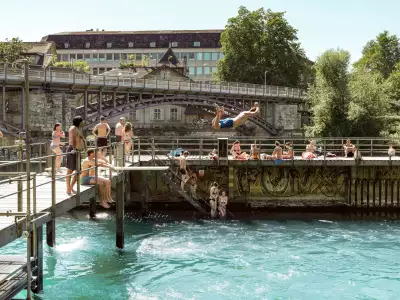
Diving in Flussbad Unterer
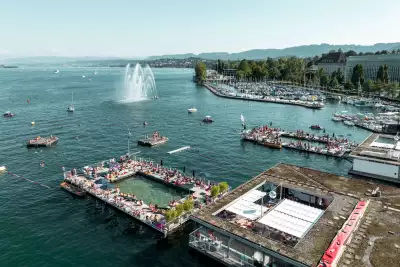
This is Zurich at its most surprising. On a hot day, the entire city seems to relocate to the water. There are more than 20 badis – open-air bathing spots along Lake Zurich and the River Limmat – and going for a swim is treated less as an outing than as a way of life.
Office workers cool off during lunch breaks, families spend entire afternoons by the lake, and locals drift downstream in waterproof dry bags that double as floats.
The best-known is Flussbad Oberer Letten, a 400-metre swimming channel complete with a diving platform, volleyball courts and a crowd that would not look out of place in Berlin.
Frauenbad, an elegant Art Nouveau wooden bathhouse beside the Old Town, welcomes women during the day before transforming into the barefoot Barfussbar each evening.
The lake is just as much a playground. Paddleboarders skim across the water, sailing boats drift past elegant waterfront villas and lakeside yoga classes make the most of long, warm mornings.
It is hard to think of another European city where you can hike, swim, browse galleries and enjoy dinner beside the river all in a single day
For those craving altitude, Uetliberg offers panoramic hiking and cycling trails overlooking both the city and the Alps beyond. It is hard to think of another European city where you can hike, swim, browse galleries and enjoy dinner beside the river all in a single day.
Summer also brings some of Zurich’s biggest events. Street Parade, the world’s largest techno parade, draws hundreds of thousands of revellers each August, while Zürcher Theater Spektakel transforms the lakeside into an open-air celebration of theatre, music and performance. Zurich Art Weekend in June draws galleries, collectors and curious locals.
Autumn
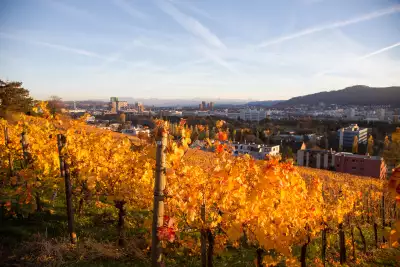
Rebberg Waid is a tiny, south-facing vineyard on the Waid hillside above Höngg
When the light softens, Zurich turns to eating, drinking and slowing down. The wine harvest begins around Lake Zurich, where vineyards have supplied the city for centuries, and autumn menus fill with mushrooms, game, and other seasonal produce. Seek out räuschling, the region’s signature grape, or head to Helvetiaplatz market on a Tuesday or Friday morning, when stalls pile up with regional fruit and vegetables, bread, cheese and other produce.
As the days shorten, culture tends to take centre stage, and the city is steeped in visual art. The Zurich Film Festival runs from late September into early October, bringing international premieres, emerging filmmakers and major names from cinema to venues across the city.
Centred on Sechseläutenplatz, the 11-day festival combines international competitions and Gala Premieres with talks, masterclasses and events designed to bring audiences closer to the people behind the films.
Autumn is also when Zurich flexes its design credentials. Zurich Design Weeks fills studios and showrooms with exhibitions, talks and workshops, but the city offers plenty to explore year-round.
Pavillon Le Corbusier, the architect’s final completed work, sits beside the lake, while Freitag’s unmistakable tower of stacked freight containers rises above Zürich-West.
Cabaret Voltaire, founded in 1916, marks the birthplace of the Dada movement, and Santiago Calatrava’s sculptural Stadelhofen station turns an everyday journey into an architectural attraction. They make design feel woven into the fabric of the city rather than confined to galleries and festivals.
For something slower, autumn is the perfect excuse to embrace Zurich’s wellness culture
For something slower, autumn is the perfect excuse to embrace Zurich’s wellness culture. Hürlimannbad & Spa occupies a beautifully restored brewery, complete with rooftop thermal pools overlooking the city, while a floating sauna boat allows brave bathers to plunge directly into the lake between steaming sessions.
It is a fitting end to a morning spent hiking, swimming, browsing museums or simply exploring Zurich’s green spaces.
Winter
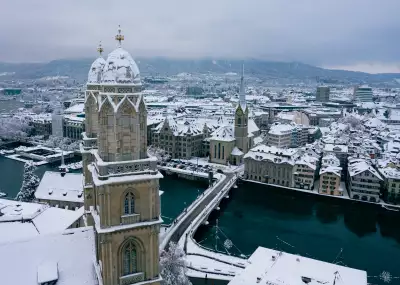
Zurich's Old Town, with the Grossmünster in the foreground
Zurich wears Christmas exceptionally well. From late November, Bahnhofstrasse sparkles beneath the famous Lucy lights – around 12,000 glass crystals suspended above one of Europe’s grandest shopping streets. At Werdmühleplatz, choirs perform from a giant Christmas-tree stage, while festive markets spread across the city selling quaffable mulled wine, handmade gifts and Alpine comfort food.
Along the River Limmat, hundreds of floating lanterns illuminate the water during Lichterschwimmen, adding another layer of magic to an already festive city. Even without a layer of December snow, Zurich feels built for winter wandering.
It is also the season to retreat indoors. Zurich is home to more than 60 museums – the highest concentration anywhere in Switzerland – ranging from the vast Kunsthaus Zurich, Switzerland's largest art museum, to the Swiss National Museum, Museum Rietberg and the FIFA Museum.
Together with the renowned Zurich Opera House, they make culture every bit as much a draw as twinkling Christmas markets. Whether you’re escaping the cold or simply slowing down the pace, winter proves Zurich is far more than a fair-weather destination.
Where to eat
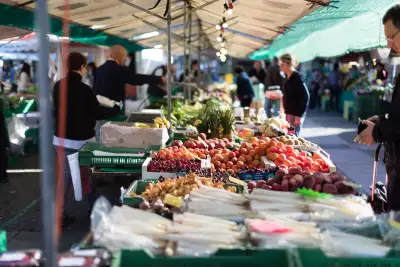
Traditional fresh food market located at Helvetiaplatz
Food has become one of Zurich’s biggest reasons to visit. Sustainability, seasonality, and craftsmanship run through much of the city’s restaurant scene. Zurich’s culinary identity is rooted in quality rather than spectacle, combining traditional Swiss flavours with international influences, innovative cooking and a deep appreciation for local produce.
Haus Hiltl, the world’s oldest continuously operating vegetarian restaurant, has been serving meat-free cooking since 1898, long before plant-based dining became a global trend.
Today, its famous buffet remains a Zurich institution, while restaurants such as Kle and Neue Taverne are helping redefine what sustainable dining can look like, with elegant vegan and seasonal menus that have earned international attention.
The Artisan and Drei Stuben, where Corin Schmid helms the kitchen, showcase another side of Zurich’s food culture, championing thoughtful, seasonal cooking and local ingredients.
London diners may recognise Schmid from the four-hands dinner she cooked at Canal this June with Lewis de Haas in collaboration with Foodism magazine, bringing a taste of Zurich’s contemporary culinary scene to the capital (including herbs from Drei Stuben’s garden in her suitcase).
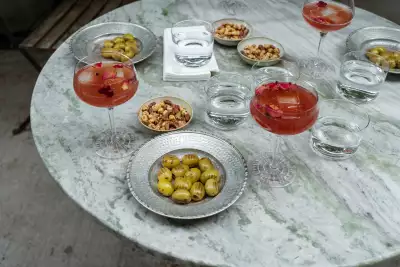
Swiss tradition of Apéro, an after-work ritual dedicated to enjoying drinks and light snacks
Elsewhere, Capri Bistrot blends Mediterranean influences with a relaxed neighbourhood atmosphere; Restaurant Char celebrates cooking over a fire; and Fischerstube offers a taste of traditional Swiss hospitality.
Trattoria Neumarkt brings together Italian and Japanese influences, while Roter Delfin has become a favourite for contemporary Swiss dining. For an experience unlike any other, Blinde Kuh invites guests to dine entirely in darkness, served by blind and partially sighted staff.
Beyond restaurants, Zurich’s food culture extends to independent coffee roasters, artisan bakeries, natural wine bars, and local vineyards, where the city’s commitment to craftsmanship is equally evident. With only around one per cent of Zurich wine exported outside of the country, the best place to discover the region’s best bottles is right here – ideally alongside a plate of seasonal, locally inspired food.
Zurich by neighbourhood
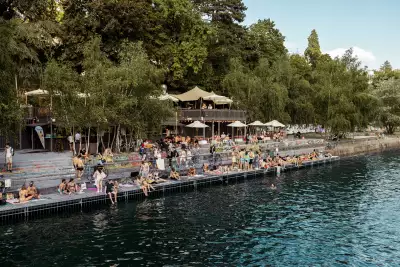
Flussbad Oberer Letten public river bath along the Limmat River
Altstadt (Old Town) is the city’s medieval heart, where narrow cobbled streets weave between church towers, historic guild houses and independent boutiques. It is also home to landmarks such as the Swiss National Museum and the Kunsthaus Zurich.
Zurich-West tells a different story. Former factories and railway arches have been transformed into galleries, breweries, stylish restaurants and design shops, making it the city’s creative centre. Langstrasse offers Zurich’s liveliest nightlife, with cocktail bars, music venues, and restaurants that reflect the city’s multicultural communities.
On the eastern shore, Seefeld revolves around the lake, where leafy parks, elegant cafés and the promenade encourage a slower pace. Nearby Enge combines waterfront parks with the FIFA Museum and Museum Rietberg, while Bahnhofstrasse remains one of Europe’s great shopping streets, balancing luxury brands with Swiss chocolatiers, artisan makers and independent retailers.
The Essentials
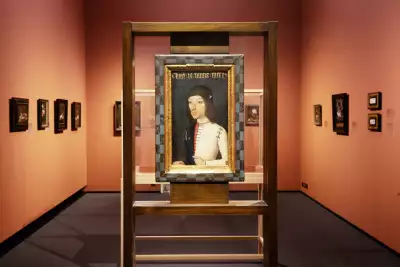
Kunsthaus Zurich
When to go: This is almost a trick question – any time! Spring brings festivals and pink-hued blossoms that line the streets; summer is made for outdoor swimming and sunsets; autumn celebrates the region's best food and wine; and winter delivers cosy Christmas markets and world-class culture.
Getting around: Zurich is very walkable, and the Zürich Card includes unlimited public transport journeys, lake cruises and entry to many museums.
Don’t miss: Swim in the lake or wander whichever neighbourhood catches your eye – and discover why Zurich consistently ranks among the world’s most liveable cities.
Plan your trip: visit zuerich.com/en, follow @visitzurich on Instagram and share your adventures using #VisitZurich