A streak of electric blue darts across the path and lands on the gnarled arm of a fig tree, firing off a call that’s closer to a sci-fi blaster than birdsong. The dazzling swallow-tailed manakin is joined by a soot-black squirrel skittering up the trunk, while the prehistoric croak of a channel-billed toucan resounds through the canopy.
I scan the forest, not for wildlife, but my teenage children, who have charged ahead, unimpressed by a walk that is “basically the same as the last one.” I linger, letting the Tijuca National Park thicken around me.
Thirty minutes later, impatience gives way to awe at the panoramic viewpoint of Vista Chinesa. Fingers point and excited voices lift. Between emerald peaks, sprawls one of the world’s most recognisable cityscapes, Christ the Redeemer standing sentinel above Rio de Janeiro. “This is better,” my son says, eyes fixed on the view. “This is where our journey really begins.”
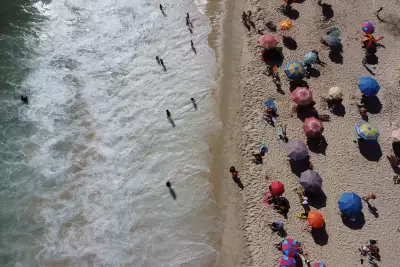
The Brazilian beach in its glory
Anyone travelling with teenagers will recognise the emotional tightrope, trying to give them the trip they want, while hoping for the holiday you’ve imagined. Our journey began during lockdown, fuelled by a desire to be somewhere else – a promised future embodied by a hand-painted Brazilian flag taped to the kitchen wall. Now it was the time to see whether Rio’s mix of culture, nature and exuberance could win over Charlotte, 14, and Henry, 17.
As we are funnelled downhill through frenetic traffic, past sun-faded Art Deco façades and volleyball games on Botafogo beach, a full moon rises and the evening light blushes Sugarloaf Mountain pink. The trip is beginning to look up.
Divide and conquer
In our pyjamas, hands wrapped around mugs of earthy coffee, we watch the sun unlock the drama of the city’s skyline. From our balcony, cable cars glide up Sugarloaf Mountain as bananaquits shriek from an avocado tree. It feels like the moment to make a decision – divide and conquer – accepting I can’t please everyone otherwise.
Football is the priority for Henry and my husband, so Charlotte and I stroll downtown. We pick our way down Santa Teresa’s steep cobbled lanes, past vivid murals of Brazilian animals and heroes, the distant trill of the canary-yellow Bonde tram. Often described as bohemian, Charlotte describes the neighbourhood as feeling “slightly edgy”, as cats slink in the shadows of giant fig trees and graffiti fills gaps between murals.
We spill into the tiled frenzy of Escadaria Selarón – Rio’s answer to Barcelona’s Park Güell - then fuel up on pão de queijo, tiny, addictive, cheesy biscuits. Beneath the Carioca Clock, Natalia from Free Walker Tours explains that carioca means people of Rio, then threads the city’s story from indigenous roots to Portuguese colonisation and modern-day Brazil.
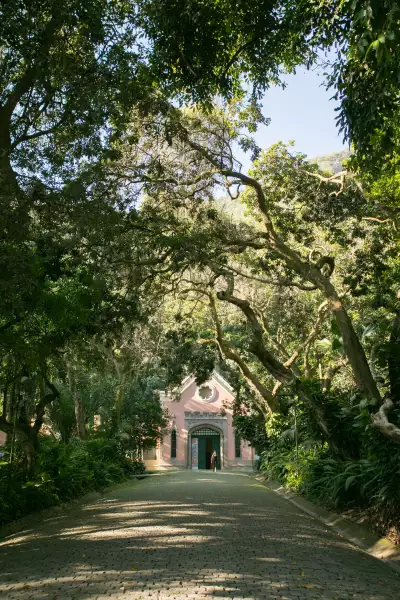
A scene from Parque Lage, located at the foot of the Corcovado mountains
RIOTUR RAFAELCATARCIONE
We slip into cool, baroque churches, rummage through rails of vintage clothes at the Saturday market, then surrender to the gilded decadence of Confeitaria Colombo, biting into rich, rib-beef empanadas. On the way back, a hop-on samba tour bus blares out music as a woman dances elegantly on the open deck. Charlotte giggles, “This is something you don’t see in London.”
Meanwhile, my husband and Henry embark on a pilgrimage to the Maracanã stadium. On a self-guided tour, they wander past framed vintage football shirts and scuffed boots, pausing at names that have shaped Brazilian football – Pelé, Neymar – before emerging into the vast bowl of the stadium. It deepens their determination to experience a match for real.
Securing tickets for a Fluminense-Santos derby proves maddeningly opaque, but persistence pays off. As the whistle blows, the stands erupt with singing, clapping and spontaneous embraces – a heady mix of beer, sweat and unbridled passion. As friends arrive en masse and families bring babies, Henry grins and shouts, “It’s much more energetic than what you get in the UK.”
Going with the flow
It’s time to reunite and share stories, no better way than in the queue for Sugarloaf Mountain. The glass cabin peels away from the station, gliding over the beach as the forest falls from view, and tourists shrink to ant-like dots. Perspective plays tricks, so I probably shouldn’t laugh when one child asks if the descending cable car is going faster than ours.
Sugarloaf is reached in two hops, the first stopping at Morro da Urca, where selfie-taking goes into overdrive. Across Botafogo Bay, boats dart like silver needlefish sewing white threads, downtown’s high-rise towers cluster like glass dominoes and clouds swirl around Corcovado, teasing us with glimpses of Christ the Redeemer.
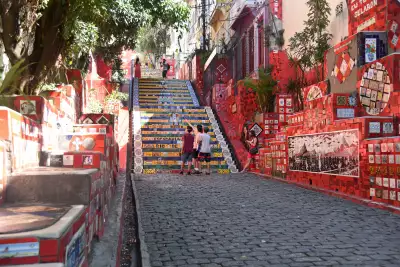
Riotur Escadaria Selarón
Alexandre Macieira
Though, this being Rio, peace and quiet are not on the agenda. A DJ commands the hilltop, bass thumping to Lana Del Rey, arms raised, drinks sloshing, the beat nudging us into an unplanned bounce across the hill. Charlotte laughs, “I love how there’s music everywhere we go.”
We time our final ascent for dusk, as golden light shines on climbers inching up its sheer face, and the mood softens into something almost reverential. At the summit, the soundtrack fades to murmured voices. We sit in shared silence as Copacabana’s surf laps the shore and the city’s lights flicker on like a starry night unfolding on the ground.
Henry thinks back to watching Rio, the animated film, as a small child. “I didn’t realise how long I’ve wanted to come here,” he says. “Now I am, it feels unreal.”
Seeing Rio through their eyes
After days of obsessively tracking the weather, we book early-morning tickets to Christ the Redeemer. The 6.30am alarm feels brutal for Henry and Charlotte. A lost driver and dodgy phone signal that refuses to load tickets fray nerves and patience is thin when we join the noisy queue for the little red train up Corcovado.
The carriage rattles, snaking past jacarandas and tangles of vines, Ipanema’s curved beach glints and the statue draws closer – the mood lifts. After a final stretch of steps and breath-catching viewpoints, we approach the statue from behind.
I’m unprepared for the sheer scale, but Charlotte, distracted by the rolling waves of the Atlantic, asks innocently, “Where’s Christ the Redeemer?” Henry rolls his eyes and seeks refuge from his sister in the small chapel beneath the statue.
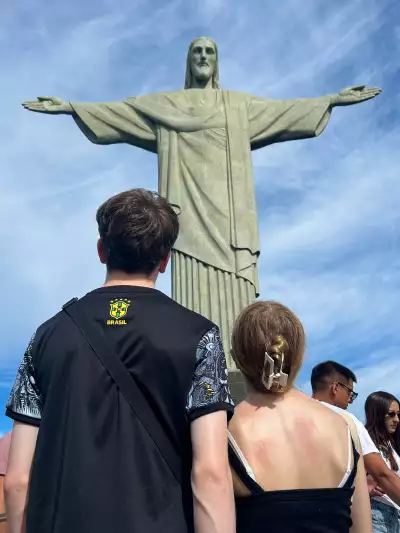
Despite my planning, it’s crowded and chaotic as people jostle to take photos in a space that feels no bigger than a postage stamp.
Charlotte jokes, “Is everyone taking photos of me?” I wish for clouds and solitude. Yet, Christ the Redeemer is mesmerising – his exposed heart, watchful eyes and elegant lines of his robe. Henry and Charlotte, unfazed by the crowds, simply take it in. They’ve passed the giant photograph in Heathrow’s Terminal 3 for years, and now they’re standing beneath the real thing, the scale of it settling in slowly.
“I get it now,” Henry remarks. “This isn’t just famous – it symbolises Brazil and Christianity.” Following their lead, I relax my tight shoulders, tuning out the noise and sharing their sense of privilege too.
Feed them and let them be children
Returning to Santa Teresa, our driver opts for a scenic foothills route, complete with heart-stopping near-misses with the tram. Whitewashed chapels slide past street-food stalls frying golden coxinhas, while galleries and fashion boutiques showcase independent Brazilian designers. It’s Sunday afternoon, the sun is blazing and the neighbourhood buzzes with a weekend energy, but we’ve misjudged lunch, sparking a near-mutiny.
At Bar do Mineiro, where hand-carved woodwork, faded photos and old kitchen utensils decorate the walls, chatter rises above the kitchen’s sizzling symphony – reminiscent of a Madrid tapas bar.
The one-hour wait is redeemed by bowls of steaming feijoada, a slow-cooked beef-and-bean stew, smoky and comforting, somehow perfect in the heat.
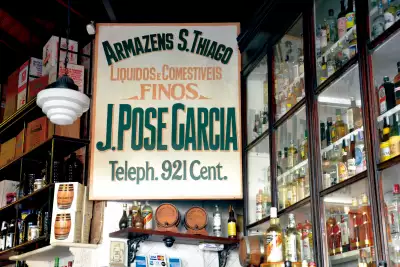
One of Rio's legacy liquor stores
Alexandre Macieira
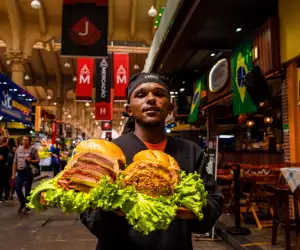
Plates are scraped clean within minutes, so we add bolinhos com costela desfiada – crisp, spherical croquettes stuffed with unctuous rib beef and served with a fiery, punchy sauce.
I warn Charlotte off, but she ignores me. “I want to try things I wouldn’t at home,” she says, before her extreme reaction makes us laugh.
We began our stay in a cosy, budget apartment with panoramic views and end it in a hotel – a welcome pause from the cultural overload. Henry disappears into the gym, Charlotte practises handstands in the pool, and, crucially, both build breakfast plates so ambitious that lunch becomes unnecessary. I finally slow down with a book, while my husband hunts down vinyl in Rio’s record shops.
The perfect ending
As the pace slows, so does our time in Rio. We amble along Copacabana on a cloudy afternoon – weather that does nothing to deter locals, overloaded with picnics, multicoloured umbrellas and loud stereos. Men dressed in orange call out “mate gelado” – a sweetened iced tea – Charlotte marvels at how they balance barrels on their shoulders, alongside bulging sacks of biscoito globo.
We buy moreish ring-shaped tapioca snacks, scraping them off our teeth as we watch surfers catch thunderous waves and fishermen their supper.
As the light retreats, we clamber over the headland to Pedra do Arpoador – a popular sunset spot. Perched on slanted rocks, we settle as a new wave of vendors carefully carry trays of neon-bright juices, cocktails and beers across the uneven rock. The steady rhythm of buying and selling becomes as hypnotic as the sunset itself.
Charlotte murmurs, “I didn’t think I could get used to a diverse place so quickly.” Henry is quieter, mesmerised by the fading light, and eventually reflects, “people seem to think travel is about ticking places off, but this trip has stretched me – in a good way – and it was totally worth it.”
Watching them take it in, I realise that Rio hasn’t tried to entertain them, it’s simply been itself – and that’s what worked, shifting the way they see the world, while providing me with the holiday I’d been imagining.