It’s my fifth day in Bangkok, and I’m almost out of time. One hand wrestling my hat, knees clutching the driver in front of me, I weave through the humid, densely packed streets of Phra Nakhon on the back of a Grab in a last-ditch attempt to catch a glimpse of Wat Phra Kaew, the shimmering temple of the Emerald Buddha.
Ordinarily, I might not have left such a rite of passage until four hours before boarding a flight back to London, but – as illustrated by the scales newly strained by the weight of my commitment – I’ve had more pressing issues to attend to.
I’m here, quote-unquote, working; dissecting radioactive lizard brains, outlandish love stories and the culinary aspirations of Louis Vuitton in order to understand how this beautifully chaotic city rewrote all of the rules in order to become one of the global capitals of fine dining.
Anyone with even a vague awareness of the exclusive world of tweezers and tasting menus will know that it has a reputation for being a buttoned-up sphere. Parodied in horror films such as The Menu and alluded to in hit TV shows including The Bear, fine dining is typically defined by multiple courses, formal service, fine ingredients and elaborate technique.
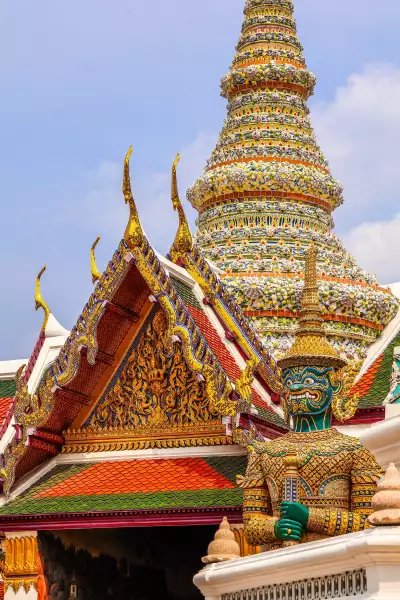
Wat Phra Kaew temple in Bangkok
Pexels / Renata Almene
It does not simply involve serving a meal but is an experience in which precision and ceremony are almost as important as the food itself.
Needless to say, it’s not for everyone – not least because the cost can be extremely prohibitive. To buy into the action usually costs a minimum of £250 per person and can reach four figures in the blink of an eye. The industry itself generates around £48 billion a year, raking in more money than luxury furniture or even art.
Guarded by opaque awards bodies such as Michelin and Gault & Millau, chefs who want to be a part of the scene must somehow conjure immense creativity, all while playing to a set of very strict rules. And, to an outsider, it would seem as though those in Bangkok are very good at sticking to them.
In 2025, the city in Thailand had six restaurants on the World’s 50 Best Restaurants list – more than London, Paris, Tokyo or New York – with Gaggan at 6, Potong at 13, Sorn at 17, Sühring at 22, Le Du at 30 and Nusara at 35.
But spend even a few hours in the effervescent Thai capital and the idea that its most renowned chefs have reached such acclaim by toeing the line begins to feel absurd. Bangkok is not a city underpinned by strict structure or obedience – or at least it doesn’t feel that way. Everywhere you look, it improvises.
A looming cobalt neon sign of the chef’s face greets diners as they line up to enter the dark, red-lit room to the electric sound of ‘Kids’ by Kyle Dixon and Michael Stein
Pavements serve as kitchens and places for xiangqi tournaments, shrines flicker at the feet of megamalls, and motorbike taxis in orange vests move through traffic with the confidence of a clairvoyant. The sacred and the profane, the ancient and the innovative sit side by side in a landscape where chefs can be as adventurous as the streets they call home.
Nobody personifies this like Gaggan Anand. Born in Kolkata to Punjabi parents, the frenetic, anarchic chef arrived in Bangkok after a stint with Ferran Adrià’s research team at elBulli – the legendary Catalan restaurant that enraptured the world with gels, foams and trompe l’œil mouthfuls that defined molecular gastronomy. In 2010, he opened Gaggan in Bangkok, which over the last 15 years has metamorphosed into myriad playful, emotional, idiosyncratic creatures.
The current iteration of Anand’s vision sits in a brutalist cube engulfed by foliage in Sukhumvit, an ever-thrumming conurbation of shopping centres, skyscrapers and leafy suburban residences piled up to the east of the old city. While many fine-dining experiences get by on promising a dose of theatricality, Gaggan takes all the most exciting, energising aspects of the city of Bangkok – the pace, the lights, the diversity, the loud music – and turns them up to maximum volume.
Before even booking a seat, a no-phones, casual-only clothes policy sets the tone. A looming cobalt neon sign of the chef’s face greets diners as they line up to enter the dark, red-lit room to the electric sound of ‘Kids’ by Kyle Dixon and Michael Stein.

The lick-it-up sakura blossom at Gaggan
The experience, hosted along a 14-seater kitchen counter, can hardly be described as a restaurant. It’s more of a clandestine spoken word performance hinged on 25 courses split into five acts, each of which leans into a country or cooking style that influenced the chef – including India and, of course, Thailand.
Plates move from aloo gobi ‘cookies’ and coconut soup soft-serve to goat curry moulded into the shape of a fluorescent green brain and served under blue light with a blood-red beetroot glaze squirted into the hand of the diner.
All of this is served to the sound of Anand’s rhythmic manifesto. Blurring reality with fantastical fiction, the chef goads the room to a crescendo where even the most uptight guests are belting out ‘I Want It That Way’, faces gleaming like the disco ball glistening in the light.
With sittings only available four nights a week, bookings at Gaggan are competitive, to say the least. Upstairs, Ms Maria & Mr Singh is another way to delve into the chef’s psyche without having to beg, borrow or steal for a seat.
Ranked 27 in Asia’s 50 Best Restaurants awards, the collaboration between Anand and head chef Hernán Crispín Villalva riffs on the aspects of Bangkok that are flirty, colourful and fun. Built around a fictional love affair between a Mexican woman and an Indian man, the storybook-style menu blends the two countries’ cuisines with a large serving of innuendo.
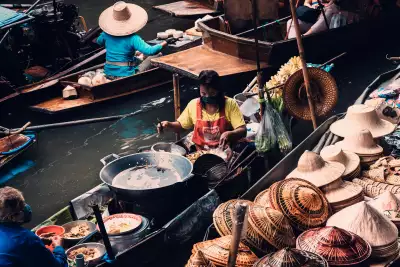
A floating market
Amie Chou
Overall? The plump pork vindaloo tacos, silken butter chicken enchiladas and gloriously oozing keema quesadillas are every bit as deeply comforting as the hedonistic, mezcal-fuelled experience is riotously fun.
Then, there is Anand for the squeamish; the rebellious chef’s vision with all but a dash of the edge buffed out. At Gaggan at Louis Vuitton inside the palatial Gaysorn Amarin shopping centre, the provocative chef reins it in, paying homage to the city’s other sanctum of worship: the mega mall.
Past the polished floors, escalators and well-guarded handbags, the restaurant spreads itself across a corner of the building, bright with eerily flattering artificial light. Vast, comfortable and gleefully monogrammed, it’s every inch the premium airport lounge – which is to say, diners tend to wear slightly smug expressions of satisfaction.
Anand and his British-born head chef, Vix Rathour, serve bite-sized, seasonal flavour bombs inspired by Vuitton’s motto (something to do with travel). There’s a goat’s cheese, beetroot and Oscietra caviar sandwich inspired by a Jammie Dodger, a clever pavlova sandwich that’s a riff on the Australian favourite, and a Gaggan staple, which requires diners to lick a sliver of tiramisu-flavoured mousse directly from the plate.
For diners less inclined towards glowing imitation brains, it’s a reminder that Anand can do both
It’s quirky, creative and – for a luxury brand with shareholders to please – a collaboration that’s rebellious in its own way. For diners less inclined towards glowing imitation brains, it’s a reminder that Anand can do both.
Then there are the Sühring twins, whose eponymous three Michelin-starred passion project bucks all expectations of Bangkok’s dining scene once again. A short drive from the glass towers of Sathorn, the leafy mid-century villa mirrors the tempo of one of Bangkok’s quieter corners.
Yen Akat, on the southeastern edge of Bangkok’s central business district, is an airy, sprawling neighbourhood of embassies, family homes and flattened low-rise apartment buildings where bougainvillaea spills over walls, smothering the city’s relentless pace.
What’s surprising about Thomas and Mathias’s restaurant is not where it is, but what it’s serving. Sühring is an ode to German cuisine served with a side of the utmost sophistication. An elegant interpretation of the cuisine they grew up eating, here, dishes one might ordinarily baulk at in the Thai heat and humidity somehow feel logical when served with such beautifully choreographed precision, poise and grace.
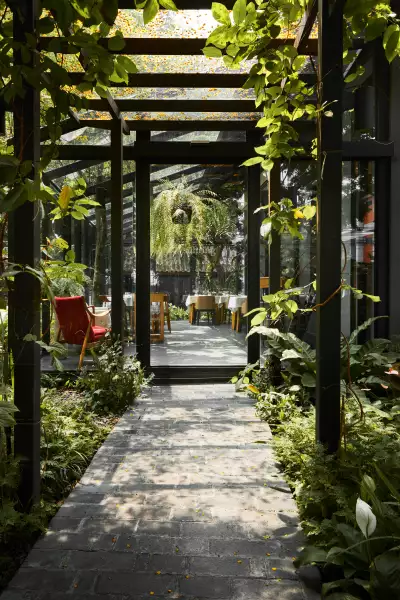
The entrance to Restaurant Sühring
TINNAPHOP TONITIWONG
On paper, it is almost the antithesis of Bangkok’s exuberance, but as servers dance around serving smoked eel, pâté en croûte and spätzle, it’s clear that in a fine-dining landscape that puts France, Italy or Japan on a pedestal, Sühring is just as radical. Proof that Bangkok rewards conviction over convention, even if you dare to avoid the chilli.
Yet, the restaurants that best explain Bangkok’s rebellious rise aren’t the ones borrowing from abroad – they’re the ones looking closer to home. Sure, the likes of Gaggan and Sühring have set the stage, but the city’s greatest triumph has been turning that attention back on itself.
The city’s own cooks have become its most exciting, compelling storytellers, and no restaurant embodies that better than Nusara. Housed in a century-old shophouse overlooking the shimmering jade rooftops and gilded spires of Wat Pho in Phra Nakhon, brothers Thitid ‘Ton’ and Chaisiri ‘Tam’ Tassanakajohn’s ode to their grandmother is inseparable from Bangkok.
A regular on local television, Ton is already a national culinary hero, while Tam shuns the limelight as one of the country’s leading sommeliers. The pair’s first restaurant, Le Du, was instrumental in proving that Thai ingredients and techniques are worthy of fine-dining acclaim, and it became the first restaurant from their home country to top Asia’s 50 Best Restaurants list.
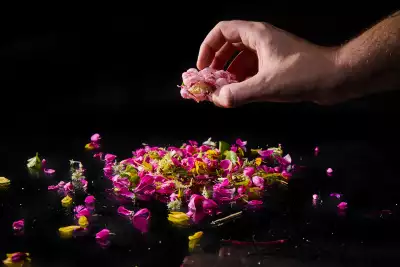
Flower papadum at Gaggan
Flower pappadum at Gaggan
Nevertheless, Nusara, named for their family’s matriarch, is now the place to be. Outside, pavements vibrate with tourists wielding selfie sticks while neon-lit tuk-tuks and saffron-robed monks diligently rattle on by. Inside, the same energy is distilled into a warm, personal, vivacious tasting menu served with soul; a love letter to the hospitality that shaped them.
Dinner begins upstairs with jewel-like snacks that sparkle on the palate like the temple spires within view. Blue swimmer crabs awaiting their doom fizz around their tanks like it’s 1999, until, downstairs, they’re served in a richly decadent, sweet-and-hot silken yellow curry. Over more than ten courses, fragrant herbs tease and intrigue with every bite until, suddenly, you’re in Nuss Bar sipping a winter melon and pandan punch, wondering how it could all be over.
But there’s yet more to savour. In Bangkok’s relentlessly energetic Chinatown, Yaowarat, Potong sits in pride of place. Amongst the narrow lanes lined with hanging roast ducks, flashing gold shops and food stalls whose queues spill into the road, Chef Pichaya ‘Pam’ Soontornyanakij has transformed her family’s 120-year-old Chinese herbal medicine shop into an exploration of her heritage.
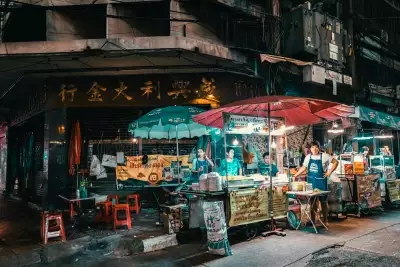
Street food in the Thai capital
Tony Wu
Visitors wind their way floor by floor through the lovingly restored Sino-Portuguese building, past the old apothecary cabinets where Pam’s ancestors once dispensed traditional remedies, before reaching the intimate, sumptuous dining room, shrouded from Chinatown’s sea of neon.
Recently crowned the World’s Best Female Chef, chef Pam delves into the nooks and crannies of five generations of Thai-Chinese roots via plate after plate of expertly curated theatre. Plump slices of 14-day dry-aged duck glisten in low light; pad thai is deconstructed, reimagined as a red, white and blue meditation on migration; and seafood courses arrive wrapped in fragrant, delicate herbs that reference the ingredients once sold downstairs. Every mouthful exists to showcase a family’s rich history – and like someone who knows her own story inside out, Pam serves it all up with no ego.
Perhaps, after all is gobbled, digested and done, this is what separates the fine dining scene of this city from all else. Whether it’s a reimagination of the country’s favourite noodle, a coconut soup soft serve, or a spoonful of German pasta, what’s invigorating about each taste at this city’s elevated restaurants is that each and every one has its own distinctive story.
It works because Bangkok is a city with an insatiable appetite – and absolutely no dietary requirements.